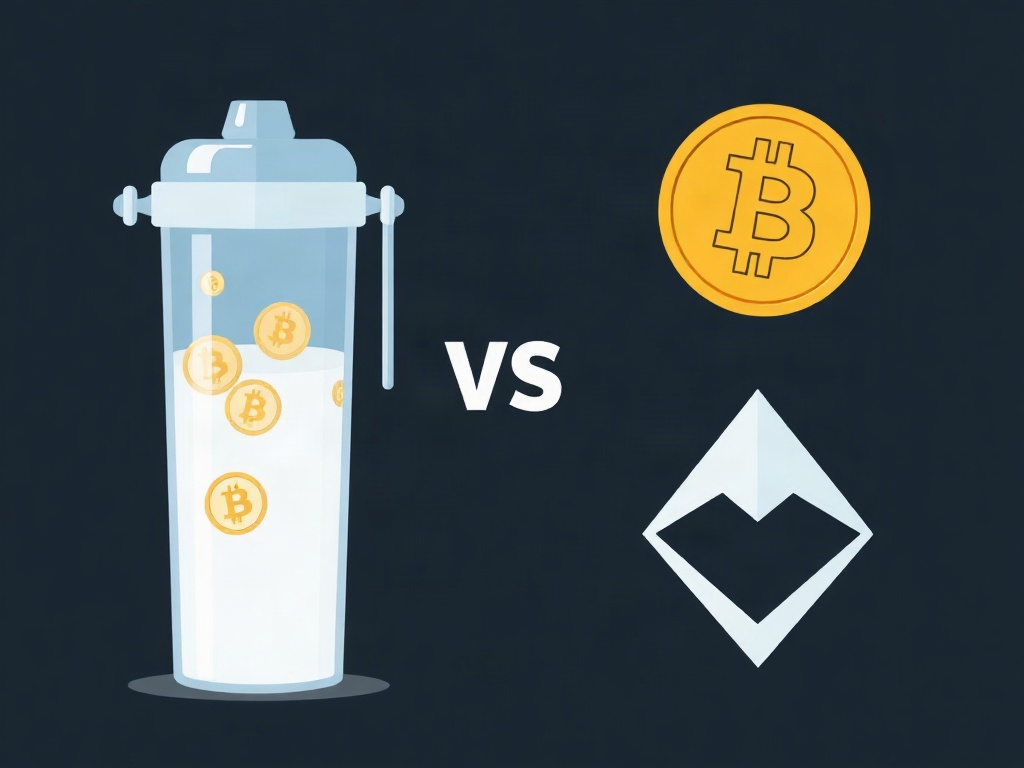
In the ever-evolving landscape of digital currencies, privacy remains one of the most debated and sought-after features. Users seeking to obscure transaction trails often weigh two distinct approaches: using a Bitcoin mixer versus converting to Monero. The comparison known as "Bitcoin mixer vs Monero conversion" encapsulates a fundamental divide in how privacy is achieved—one through post-transaction obfuscation, the other through native protocol-level anonymity. Understanding the mechanics, trade-offs, and appropriate use cases of each method is essential for anyone serious about financial sovereignty in the crypto space.
The Mechanics of Bitcoin Mixers
What Is a Bitcoin Mixer?
A Bitcoin mixer, also referred to as a tumbler, is a service that pools together multiple users' funds and redistributes them in a way that breaks the on-chain link between sender and recipient. By aggregating transactions from many individuals, a mixer makes it computationally difficult for blockchain analysis firms to trace the flow of specific satoshis. The user sends Bitcoins to the mixer's address, the service holds them for a variable period, and then sends equivalent amounts to designated output addresses, typically deducting a small fee.
How Mixing Works Technically
The typical mixing process involves several steps. First, the user initiates a transaction to the mixer's deposit address, specifying the recipient address and the amount to be sent after mixing. The mixer then combines this input with deposits from other users, creating a large pool of funds. After a mixing delay—ranging from a few minutes to several hours—the service outputs the requested amount from a different pool of coins, ideally from users who deposited at different times and in different amounts. This breaking of the temporal and quantitative link is the core mechanism behind mixing.
Types of Mixers: Centralized vs Decentralized
Mixers generally fall into two categories. Centralized mixers operate as businesses that manage the pooling and redistribution process, often requiring users to trust the operator with their funds. Decentralized mixers, such as those built on CoinJoin protocols, allow users to participate in collaborative transactions without a single point of control. While decentralized options reduce trust risks, they may require more technical expertise and can be slower to coordinate.
Monero's Native Privacy Protocol
Ring Signatures and Anonymity Sets
Monero takes a fundamentally different approach by embedding privacy directly into its blockchain protocol. Every Monero transaction uses ring signatures, which mix the sender's output with several other outputs from the blockchain's history. The resulting "anonymity set" obscures which actual input authorized the transaction, providing default privacy without the need for external services. The size of the anonymity set has grown over time as the network matured, making Monero's baseline privacy increasingly robust.
Stealth Addresses and Ring Confidential Transactions
Beyond ring signatures, Monero employs stealth addresses to hide the recipient's identity. Each transaction generates a one-time address that only the intended recipient can recognize, preventing third parties from linking transactions to a permanent wallet address. Additionally, Ring Confidential Transactions (RingCT) mask the transaction amount, ensuring that observers cannot determine the value being transferred. Together, these features create a comprehensive privacy shield that is active by default.
Bulletproofs and Efficiency
To address concerns about the size and resource requirements of privacy features, Monero introduced Bulletproofs—a succinct range proof system that reduces the size of confidential transactions significantly. This improvement enhances blockchain scalability while preserving the integrity of the privacy guarantees. The result is a privacy-focused cryptocurrency that remains efficient enough for everyday use without compromising on anonymity.
Bitcoin mixer vs Monero conversion: Technical Differences
When evaluating a Bitcoin mixer vs Monero conversion, the technical underpinnings reveal why users choose one over the other. A Bitcoin mixer is an external service applied after a transaction occurs; it attempts to retroactively obscure a trail that already exists on the Bitcoin blockchain. In contrast, Monero's privacy is intrinsic—every transaction from the moment a coin is minted or transferred is private by default. This fundamental distinction means that mixing requires user initiative and trust in a third party, while Monero provides privacy automatically to all participants.
Another technical consideration is the level of traceability. Bitcoin's transparent ledger means that even after mixing, sophisticated chain analysis can sometimes detect patterns, especially if the mixer is cooperative with authorities or if the user's behavior reveals identifying information. Monero's design, however, is specifically engineered to resist such analysis. Ring signatures, stealth addresses, and RingCT collectively ensure that no transaction metadata is publicly linkable to real-world identities, barring side-channel attacks or user errors.
Usability also differs markedly. A Bitcoin mixer typically requires the user to initiate the process, deposit funds, and wait for outputs. The experience can vary widely depending on the mixer's reputation, fees, and reliability. Some mixers keep logs, while others claim no-logs policies, but verifying these claims is difficult. Monero, by contrast, requires no additional steps; anyone holding Monero enjoys privacy automatically. However, converting Bitcoin to Monero involves an exchange step, which may itself require KYC compliance depending on the platform used.
Use Cases: When to Choose Which Privacy Tool
For Traders and Freelancers
Professionals who receive cryptocurrency payments often face scrutiny from tax authorities or payment processors. In such cases, a Bitcoin mixer might be employed post-receipt to break the on-chain connection between the payment and the recipient's personal wallet. However, if the individual frequently deals in privacy-sensitive transactions, converting a portion of earnings to Monero could provide ongoing privacy without the need for repeated mixing services.
For Long-term Holders and Savings
Users holding cryptocurrency as a store of value may prefer Monero for long-term savings due to its consistent privacy guarantees. The absence of a need for periodic mixing simplifies asset management and eliminates the risk of using a compromised or exit-scamming mixer service. Conversely, those already heavily invested in Bitcoin might opt for mixing as a targeted solution for specific transactions rather than converting their entire portfolio.
For Activists and Whistleblowers
In high-risk environments, the choice between a Bitcoin mixer and Monero conversion can be a matter of safety. Monero's default privacy offers a stronger baseline for protecting transaction sources and destinations. However, if the user's existing holdings are primarily in Bitcoin, a mixer might be the only immediate option until an exchange supporting Monero is accessible. The Bitcoin mixer vs Monero conversion decision often hinges on the urgency of the need versus the availability of privacy-friendly assets.
Risks, Legalities, and Best Practices
Legal Considerations
The use of Bitcoin mixers exists in a complex legal gray area. While mixing itself is not illegal in many jurisdictions, it has been associated with attempts to evade taxation or launder funds from illicit activities. Law enforcement agencies have successfully dismantled several high-profile mixers, and users may face scrutiny if their transaction patterns are flagged. Monero, too, faces regulatory attention; some exchanges have delisted or restricted Monero trading due to its privacy features. Understanding local regulations is crucial before employing either method.
Security Risks
Centralized mixers pose custodial risks. Users must trust the operator to return the correct amount and maintain operational security. Exit scams, where mixer operators abscond with deposited funds, have occurred historically. Decentralized mixers reduce this risk but may suffer from liquidity issues or smart contract bugs. When converting to Monero, the primary risk lies in the exchange platform's compliance measures; using non-KYC or privacy-respecting exchanges can mitigate some concerns, but users must remain vigilant against phishing and fraud.
Best Practices for Privacy-Seeking Users
For those navigating the Bitcoin mixer vs Monero conversion decision, several best practices can enhance safety and effectiveness. First, research the reputation and audit history of any mixer service, prioritizing those with transparent operations or decentralized architectures. Second, if choosing Monero, ensure secure wallet software that supports the latest privacy features, such as Featherwallet or Monero GUI, and keep it updated. Third, consider a hybrid approach: use Monero for future transactions while gradually mixing or converting existing Bitcoin holdings to reduce overall traceability. Finally, stay informed about regulatory developments and technological updates in both the Bitcoin and Monero ecosystems.
Future Trends in Crypto Privacy
The debate between Bitcoin mixing and Monero conversion is unlikely to diminish as privacy remains a core value for many cryptocurrency enthusiasts. On the Bitcoin side, innovations like CoinJoin variants (e.g., Wasabi Wallet, Samourai Whirlpool) are making mixing more user-friendly and decentralized, reducing reliance on third-party tumblers. These tools integrate directly into wallets, allowing users to participate in collaborative transactions without sending funds to an external service. Such advancements aim to preserve the Bitcoin ecosystem's flexibility while enhancing default privacy.
On the Monero front, the development community continuously works on improving privacy parameters, such as increasing ring sizes and exploring post-quantum cryptography resistant to future computational attacks. The recent integration of Dandelion++ protocol improvements further obscures transaction origination, making it harder for network analysts to pinpoint the source of a transaction. These ongoing enhancements reinforce Monero's position as a leading privacy coin with a robust, evolving technical foundation.
Regulatory landscapes will also shape the future of both approaches. Governments worldwide are crafting frameworks that address financial privacy, anti-money laundering (AML), and know-your-customer (KYC) requirements. How these regulations are implemented will influence the accessibility and legality of mixers and privacy-focused coins. Meanwhile, the crypto community's advocacy for self-sovereignty and financial privacy ensures that the conversation around Bitcoin mixer vs Monero conversion will remain dynamic and multifaceted.
Making an Informed Choice
Ultimately, the decision between using a Bitcoin mixer and converting to Monero depends on individual circumstances, risk tolerance, and privacy goals. A Bitcoin mixer can be a useful tool for obfuscating specific transactions, particularly for users who must remain within the Bitcoin ecosystem. However, it requires active participation, carries custodial risks, and may not provide the same level of anonymity as protocol-level privacy. Monero offers a seamless, default privacy experience that does not require additional steps after acquisition, making it ideal for

Bitcoin mixer vs Monero conversion: Insights from a Senior Crypto Market Analyst
As a senior crypto market analyst with over a decade of experience tracking digital asset infrastructure, I've watched the evolution of privacy solutions shift from experimental mixers to protocol-level anonymity coins. The recent comparison between Bitcoin mixer vs Monero conversion highlights a fundamental divide in how market participants approach transactional confidentiality: one leverages layering and tumbling on a transparent ledger, while the other opts for a privacy-by-design blockchain from the outset. Both serve the same end goal—obfuscating on-chain trails—but their risk profiles, liquidity implications, and regulatory receptions could not be more distinct.
From a valuation and risk assessment standpoint, Bitcoin mixers often introduce smart contract or custodial exposure, and their utility can be eroded by exchange delistings or compliance blacklists, which directly impacts market depth and price stability for Bitcoin-derived positions. Monero, by contrast, operates on a different philosophical and cryptographic foundation, offering set-level obfuscation that resists blockchain analysis tools, but faces its own set of challenges, including limited on-ramp liquidity and heightened scrutiny from jurisdictional regulators. In institutional contexts, the choice between these pathways often hinges on whether the priority is incremental privacy enhancement for existing BTC holdings or a complete shift into a privacy-centric asset class.
Practically speaking, traders and portfolio managers must weigh transaction speed, fee structures, and the long-term viability of each approach against their specific compliance frameworks and risk tolerance. For those navigating the current macro environment, a hybrid strategy—maintaining core exposure through transparent assets while selectively utilizing privacy tools for specific exposures—often proves more resilient than an all-or-nothing pivot. As the sector matures, the dialogue around Bitcoin mixer vs Monero conversion will likely evolve from technical comparisons to broader questions of regulatory legitimacy, market infrastructure, and the sustainable balance between privacy and transparency in decentralized finance.