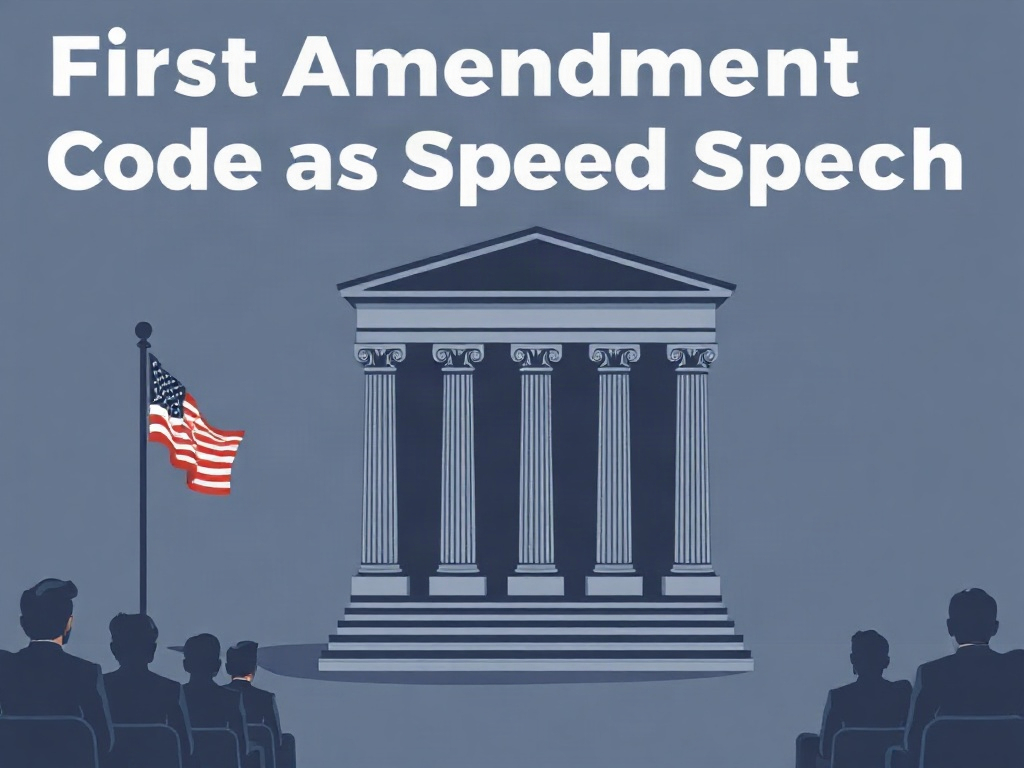
The intersection of technology, communication, and constitutional law has never been more significant than it is today. When we talk about first amendment code as speech, we are exploring one of the most fascinating and contested areas of modern jurisprudence. This concept examines whether computer code, algorithms, and digital protocols deserve the same constitutional protections as traditional forms of expression like spoken words, written text, and artistic works.
The question of whether code constitutes speech carries profound implications for software developers, internet platforms, content creators, and ordinary citizens who interact with digital systems daily. As technology continues to evolve and integrate into every facet of human life, courts, legislators, and scholars must grapple with fundamental questions about how constitutional principles apply to this new domain of human expression.
The Historical Foundation of the First Amendment
To understand why the debate over code as speech matters, we must first examine the historical context of the First Amendment itself. Ratified in 1791 as part of the Bill of Rights, the First Amendment prohibits Congress from making laws that abridge "the freedom of speech, or of the press; or the right of the people peaceably to assemble, and to petition the Government for a redress of grievances."
The framers of the Constitution could not have anticipated the digital revolution, yet the principles they established have proven remarkably adaptable. Over more than two centuries, courts have extended First Amendment protections to an ever-expanding range of expressive activities, including:
- Political pamphlets and newspapers
- Symbolic speech, such as flag burning and protest movements
- Commercial advertising
- Artistic expression in various media
- Academic and scientific discourse
This evolutionary expansion of protected speech suggests that the categories of expression deserving constitutional protection are not closed but rather open to new forms that serve similar communicative and expressive functions. The question is whether computer code fits within this expanding framework.
The Core Arguments for Code as Speech
Proponents of treating code as speech advance several compelling arguments rooted in both constitutional principles and practical considerations.
Expressive Function of Programming
At its most fundamental level, programming involves the articulation of ideas, logic, and creative solutions to problems. When developers write code, they are expressing their thoughts, problem-solving approaches, and aesthetic sensibilities. The choice of programming language, algorithm design, and architectural patterns all reflect expressive choices similar to those made by writers selecting words or composers choosing notes.
Software engineers routinely describe their work in explicitly expressive terms. They speak of "elegant code," "beautiful algorithms," and "clean architecture." This vocabulary reflects an understanding that programming is not merely mechanical but involves genuine creative expression. If a poet's arrangement of words merits constitutional protection, surely a programmer's arrangement of logical statements deserves similar consideration.
Communicative Purpose
Code frequently serves a communicative purpose beyond its functional implementation. Open-source software, for instance, is explicitly designed to communicate ideas, methodologies, and knowledge to other developers. The documentation accompanying code, the comments embedded within it, and the structure of the program itself all communicate intent and understanding.
Even proprietary code communicates to those who can read it, expressing the developer's approach to solving particular problems and encoding specific worldviews and assumptions about how systems should operate. When we examine first amendment code as speech in this context, we see that code is fundamentally a medium of human communication.
Precedent in Technology Law
Several landmark cases have established precedents supporting the treatment of code as speech. In Bernstein v. United States Department of Justice, the Ninth Circuit Court of Appeals ruled that cryptographic source code is protected speech under the First Amendment. The court recognized that source code is a means of expressing ideas and information, deserving of constitutional protection.
Similarly, in Junger v. Daley, the court found that purely functional code could still constitute expression for First Amendment purposes. These decisions have created important legal foundations upon which future cases can build, even as technological realities continue to evolve.
The Counterarguments and Limitations
Despite these compelling arguments, significant counterarguments exist that complicate the straightforward application of First Amendment protections to all forms of code.
The Functionality Doctrine
Critics argue that code is fundamentally different from traditional speech because of its functional nature. While a novel or political speech merely communicates ideas, code actually does things. When a program executes, it performs actions in the world—accessing files, transmitting data, manipulating systems, and producing tangible effects.
This functionality, critics contend, removes code from the realm of pure expression and places it within the domain of conduct that can be regulated. The government might not be able to prohibit speech about building weapons, but it certainly can prohibit the actual manufacture of weapons. By analogy, restrictions on code that performs dangerous functions might be permissible even if restrictions on describing such functions would not be.
Commercial Speech Considerations
Much code exists within commercial contexts, raising questions about how commercial speech doctrine applies. Commercial speech receives lesser protection than political or artistic speech, and software products often combine expressive elements with commercial transactions. Determining which aspects of code merit full First Amendment protection and which receive only intermediate scrutiny remains a complex legal challenge.
The licensing agreements, terms of service, and commercial arrangements surrounding software can also affect how we analyze the speech interests involved. Code released under proprietary licenses may have different speech characteristics than open-source projects explicitly designed to communicate and share knowledge.
National Security and Harm Prevention
Governments face legitimate interests in regulating code that could pose security threats, facilitate crime, or cause other harms. Restrictions on cryptographic tools, malware, and dual-use technologies serve important protective functions. Balancing these interests against First Amendment concerns requires careful analysis that cannot simply treat all code as equivalent to traditional speech.
Digital Age Applications and Emerging Issues
The treatment of code as speech has become increasingly important as digital technologies have assumed central roles in modern life.
Social Media Platforms and Content Moderation
Social media companies face complex questions about whether their algorithms and content moderation systems constitute speech. When platforms organize, prioritize, or remove content, are they expressing their own views, or are they merely facilitating others' expression?
This question has profound implications for platform liability, user rights, and the future of online discourse. If platform algorithms are speech, then platforms have strong First Amendment grounds for editorial discretion over what appears on their services. If algorithms are merely functional tools, then platforms might face greater obligations regarding content they distribute.
The Supreme Court's recent decisions on platform moderation have begun to clarify these issues, but fundamental questions remain unresolved, particularly as artificial intelligence and machine learning systems assume greater roles in content curation and recommendation.
Artificial Intelligence and Generated Code
The rise of artificial intelligence systems that generate code introduces entirely new dimensions to the code-as-speech debate. When an AI system writes code based on training data and machine learning models, questions arise about who is speaking—the AI's creators, its trainers, its users, or the AI itself.
These questions will become increasingly important as AI-generated code proliferates across industries and applications. Determining First Amendment protections for such code requires careful consideration of the human expressive elements involved in creating, training, and directing AI systems, as well as the autonomous nature of machine-generated outputs.
Open Source Software and Knowledge Sharing
The open-source software movement has demonstrated the powerful expressive and collaborative dimensions of code. Projects with millions of contributors spanning the globe showcase how code can serve as a medium for collective expression, knowledge sharing, and creative collaboration.
When governments attempt to restrict open-source software development or distribution, they potentially interfere with significant speech interests. The international character of many open-source projects also raises questions about how First Amendment protections, which fundamentally constrain United States government action, apply in a globally connected digital environment.
The Future of Code as Speech Jurisprudence
Looking forward, the treatment of first amendment code as speech will likely continue to evolve as technology advances and new cases challenge existing precedents.
Emerging Technologies and Constitutional Adaptation
Quantum computing, augmented reality, brain-computer interfaces, and other emerging technologies will present novel code-as-speech questions that current doctrine cannot fully address. Courts will need to apply constitutional principles flexibly while maintaining meaningful protections for expressive freedom.
The challenge lies in preserving the First Amendment's core purpose—protecting the free exchange of ideas and enabling democratic self-governance—while acknowledging that technological innovation sometimes requires regulatory frameworks that account for functional consequences as well as expressive content.
International Perspectives and Global Standards
Different jurisdictions have approached code-as-speech questions differently, creating a complex international landscape for software developers and technology companies. Some countries have embraced broader speech protections for code, while others have imposed stricter regulations on certain types of software.
These divergent approaches affect how developers navigate global markets and how companies design products that must comply with varying constitutional and regulatory frameworks worldwide. The development of international standards or norms around code expression could help harmonize these approaches, though significant challenges remain.
Balancing Innovation and Regulation
Policymakers face the ongoing challenge of crafting regulations that protect legitimate interests without unnecessarily constraining expressive and innovative uses of code. Overly broad restrictions on code could chill innovation, suppress valuable forms of expression, and undermine the United States' position as a leader in technology development.
Conversely, inadequate regulation could leave dangerous applications of code unchecked, potentially harming individuals, communities, and critical infrastructure. Finding the appropriate balance requires nuanced understanding of both the technical realities of software development and the constitutional principles that govern speech regulation.
Conclusion: The Continuing Evolution of Expressive Freedom
The concept of first amendment code as speech represents one of the most important frontiers in contemporary constitutional law. As code becomes increasingly central to how humans communicate, work, and live, the questions about its constitutional status grow ever more consequential.
The historical adaptability of the First Amendment suggests that code can find meaningful protection within its framework, particularly when it serves expressive and communicative functions. Yet the functional dimensions of code also require recognition that not all regulatory approaches raise the same constitutional concerns as restrictions on traditional speech.
Moving forward, courts, legislators, technologists, and citizens must continue engaging thoughtfully with these questions. The answers we develop will shape not only the future of software development but also the broader landscape of expressive freedom in the digital age. By approaching these issues with both constitutional fidelity and technological understanding, we can work toward frameworks that protect genuine speech interests while accommodating the legitimate need for regulation in our increasingly complex technological environment.
The ongoing dialogue around code as speech reminds us that constitutional principles are living frameworks capable of adaptation and growth. As we continue exploring the boundaries of expressive freedom, we honor the framers' vision by applying their foundational commitment to free expression to the new frontiers of human creativity and communication.

First Amendment Code as Speech: Why Smart Contract Developers Need Legal Clarity in Web3
As someone who spends most of my time analyzing decentralized finance protocols and governance token mechanics, I find the emerging doctrine of "first amendment code as speech" increasingly relevant to how we evaluate Web3 infrastructure. The fundamental premise is straightforward but profound: developers who write and publish smart contract code are engaging in a form of expressive activity that may merit constitutional protection. This framing matters because protocol audits, governance deployments, and even unaudited contract releases all carry speech implications. When a developer pushes Solidity code to a public repository, they are making statements about how money should move, how trust should be distributed, and how coordination should occur without intermediaries. Treating that act as pure technical execution ignores the communicative intent baked into every function name and every comment in the codebase.
The practical implications for DeFi participants are significant. If courts eventually recognize robust first amendment protections for open-source smart contract code, we could see meaningful reductions in regulatory chill that currently discourages American developers from contributing to permissionless protocols. Yield farming strategies and liquidity mining programs depend on a vibrant developer community willing to experiment publicly, and legal clarity would encourage more innovation onchain. However, this protection would not be absolute. Code that functions as a mechanism for fraud, money transmission without compliance, or direct harm would likely fall outside speech protections, similar to how shouting fire in a crowded theater remains unprotected. The challenge for analysts like me is distinguishing between expressive protocol design and conduct that genuinely warrants regulatory enforcement.
For governance token holders and DAO participants, this legal evolution deserves close attention. Token-based voting systems already blur the line between speech and action, since casting a vote is simultaneously an expressive preference and a binding on-chain transaction. As courts work through these questions over the coming years, protocols with strong documentation, clear developer disclaimers, and transparent governance frameworks will likely fare better than those operating in legal gray zones. My advice to anyone building or investing in Web3 infrastructure is to treat code quality and legal posture as inseparable concerns. The teams that survive the next regulatory cycle will be those who recognized early that their smart contracts are not just software, but speech with real economic and constitutional weight.