The modern production landscape demands seamless communication between audio hardware and digital platforms. Whether you are a music producer, live streamer, or podcast creator, understanding how to route a mixer output to exchange signals efficiently is crucial. In the btcmixer_en2 niche, this process is streamlined yet requires a deep understanding of signal flow, routing architecture, and software integration. This article provides a comprehensive exploration of the mixer output to exchange workflow, specifically tailored for btcmixer_en2 users who want to optimize their setups for reliability, fidelity, and performance.
At its core, the mixer output to exchange concept involves taking the analog or digital outputs from a mixing console or software mixer and directing them toward an exchange platform—be it a digital audio workstation, a streaming service, a recording interface, or a cryptocurrency-inspired data exchange metaphor used within certain audio networking protocols. The btcmixer_en2 environment adds a layer of specialized routing options that, when mastered, can dramatically reduce latency, eliminate signal degradation, and improve overall workflow efficiency.
Foundations of Mixer Output to Exchange Integration
Defining the Core Workflow
Before diving into technical configurations, it is essential to define what a mixer output to exchange setup actually entails. In practical terms, this means taking the stereo or multichannel outputs from your mixer—whether physical knobs, faders, or virtual strips within btcmixer_en2—and assigning them to specific input channels on your target exchange system. The "exchange" could refer to a DAW input, a broadcast encoder, a live streaming platform, or even a remote collaboration tool. The key is establishing a stable, low-latency path that preserves the dynamic range and tonal balance of the original mix.
Many beginners mistakenly assume that any output can be plugged into any input without consequence. However, impedance mismatches, sample rate discrepancies, and gain staging errors are common pitfalls. A professional approach starts with identifying the connection type (XLR, TRS, USB, FireWire, or network-based protocols like Dante or AVB), verifying compatibility between the mixer’s output stage and the exchange system’s input requirements, and ensuring that all devices are synchronized via a common clock source when operating at professional sample rates (44.1kHz, 48kHz, 88.2kHz, 96kHz, or higher).
Signal Path Considerations
The signal path between a mixer output and an exchange input is rarely a direct wire. It often passes through preamplifiers, equalizers, compressors, and analog-to-digital converters (ADCs). Each stage introduces potential coloration, noise, or latency. In the btcmixer_en2 ecosystem, users have access to virtual routing matrices that allow you to patch mixer outputs directly to exchange channels without unnecessary analog conversion, provided both systems operate in the digital domain. When analog involvement is inevitable, using high-quality cables, balanced connections, and proper grounding techniques becomes paramount to maintaining signal integrity.
Configuring btcmixer_en2 for Seamless Exchange Integration
Hardware Requirements
To achieve a robust mixer output to exchange connection using btcmixer_en2, the hardware foundation must be carefully selected. A modern digital mixer with USB-C or Thunderbolt connectivity is ideal, as it offers direct computer integration without the need for external audio interfaces. However, if your mixer is analog-only, investing in a high-resolution audio interface with pristine ADCs serves as the bridge between physical outputs and digital exchange platforms. Look for interfaces that support the same sample rates and bit depths you intend to work with, and ensure they provide aggregate I/O capabilities if you need to route multiple mixer buses simultaneously.
Additionally, consider the physical layout of your studio. Cable management, power conditioning, and electromagnetic interference (EMI) shielding can impact the stability of your mixer output to exchange pathway. Balanced TRS or XLR cables are recommended for runs longer than six feet, and using dedicated power strips for audio gear helps prevent ground loops—a common cause of hum and buzz in exchange integrations.
Software Configuration Within btcmixer_en2
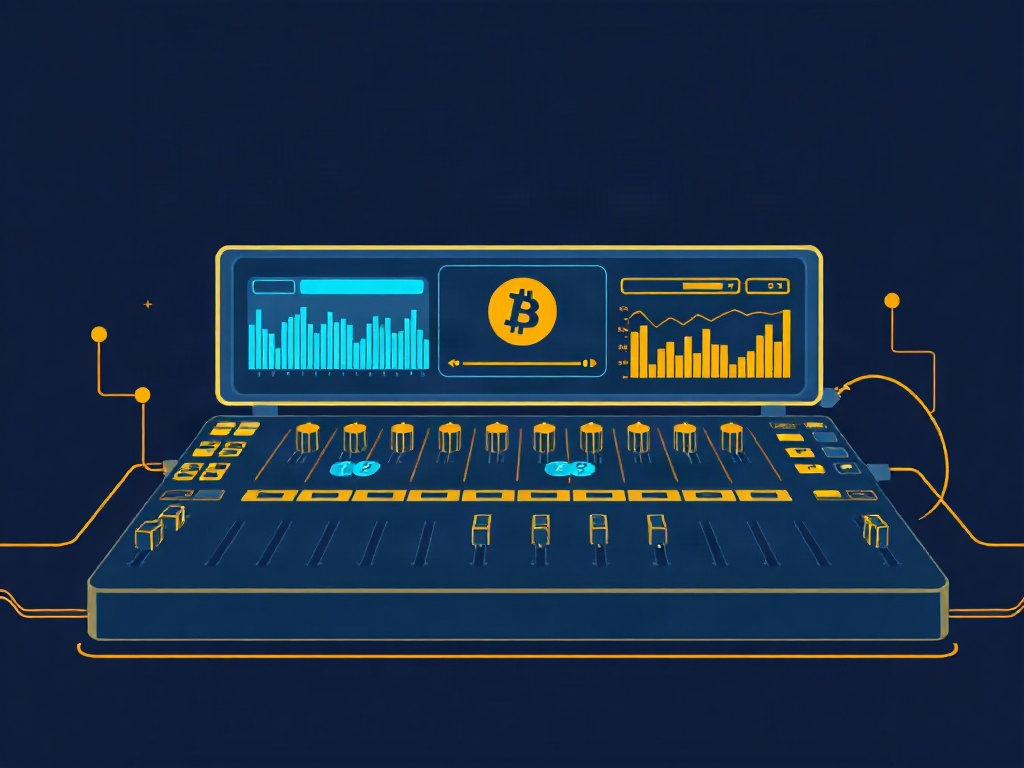
The btcmixer_en2 software suite provides a flexible routing engine that simplifies the mixer output to exchange process. Within the application, users can access the "Routing" or "Patchbay" module to assign physical mixer outputs to virtual exchange channels. This involves selecting the desired output bus from the mixer (e.g., Main Out, Aux 1, Stem Outs) and mapping it to an input slot within the exchange target. The software also allows for label customization, making it easier to track which mixer stem is feeding which exchange channel during complex projects.
Sample rate and bit depth settings must be aligned across btcmixer_en2 and your exchange platform. Mismatches here will result in either automatic sample rate conversion (which may introduce artifacts) or, in worst-case scenarios, complete audio dropout. Within the software preferences, navigate to the "System" or "Audio Device" section and verify that the sample rate matches exactly what your exchange DAW or streaming software expects. If you frequently switch between different exchange environments, consider creating recallable presets within btcmixer_en2 that store your routing configurations, ensuring rapid setup times regardless of the destination.
MIDI and Control Surface Integration
Modern production workflows often involve controlling exchange parameters via MIDI or a dedicated control surface. btcmixer_en2 supports MIDI mapping, allowing you to assign faders, knobs, and transport buttons to manipulate exchange-related functions such as input monitoring, channel muting, or send level adjustments. This integration is particularly useful for live performers who need to switch between mixer outputs and exchange destinations on the fly without reaching for a mouse or keyboard. Ensure your MIDI controller is properly recognized by both btcmixer_en2 and your exchange software, and test all mapped parameters before going live.
Optimizing Signal Flow for Low Latency and High Fidelity
Routing Strategies for Multi-Bus Setups
Professional productions often require routing multiple mixer outputs to different exchange channels simultaneously. For example, you might send the drum bus to one exchange channel, the vocal stem to another, and the master mix to a third. In btcmixer_en2, this is achieved through the software’s multi-bus routing matrix. Each bus can be configured with independent gain, pan, and routing destinations, allowing for granular control over how each element of your mix enters the exchange system. When setting up these multi-bus paths, always monitor for phase issues, especially when summing signals from different mixer buses into a shared exchange input.
Another advanced strategy involves using auxiliary sends to create separate mixer output to exchange pathways for effects-laden signals. By routing a post-fx auxiliary send to a dedicated exchange channel, you can preserve the dry signal on one path while sending the processed version elsewhere. This is invaluable for scenarios where you need to provide a raw mix to one recipient (e.g., a mastering engineer) and a processed mix to another

Mixer Output to Exchange: Trends and Market Implications
As James Richardson, Senior Crypto Market Analyst with over a decade of experience tracking digital asset flows, I observe that the movement of mixer output to exchange represents a critical data point for understanding liquidity dynamics and potential risk exposures in the decentralized finance ecosystem. The transparency—or lack thereof—of these flows often signals shifts in trader sentiment, especially when large volumes emerge from privacy-focused protocols onto centralized platforms. Monitoring such transitions allows us to gauge the balance between privacy-seeking behavior and the need for compliant on-ramps, which is increasingly relevant as institutional participants seek regulated environments without sacrificing the benefits of decentralized protocols.
From a valuation model perspective, abrupt spikes in mixer output to exchange can precede heightened volatility, as they may indicate repositioning of assets that were previously obfuscated. In my recent analyses, I've noted that when significant sums move from mixers to exchanges, it often correlates with short-term price pressure, particularly if the underlying assets are highly leveraged or tied to speculative narratives. Practically, this insight suggests that portfolio managers and risk officers should incorporate flow-based indicators alongside traditional on-chain metrics to better anticipate market turns and adjust exposure accordingly.
Moreover, the regulatory landscape is evolving rapidly in response to these patterns. Governments and compliance bodies are paying closer attention to the provenance of funds entering exchanges via mixer output to exchange pathways, aiming to prevent illicit activity while preserving legitimate privacy use cases. As an analyst, I advocate for a nuanced approach that distinguishes between normal user behavior and anomalous patterns, recommending that market participants stay informed about jurisdictional guidelines and adopt due diligence frameworks that can adapt to changing compliance requirements.