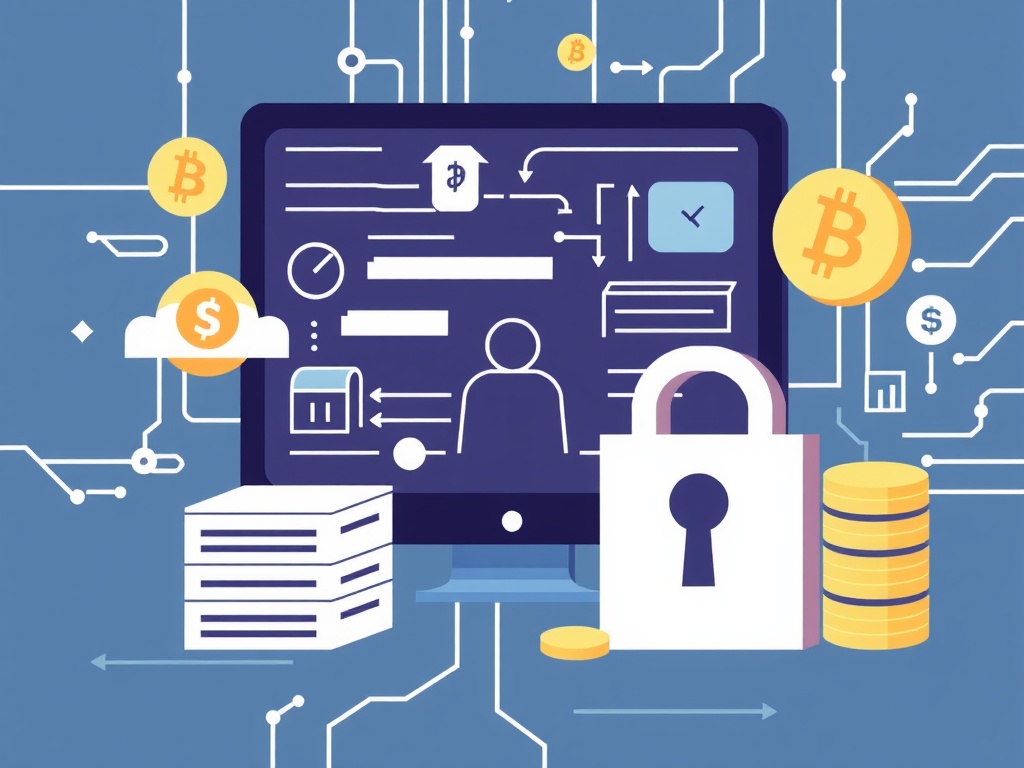
The Labyrinth privacy protocol represents a groundbreaking advancement in the realm of Bitcoin mixing services, offering users an unprecedented level of anonymity and security. As Bitcoin transactions are inherently transparent and traceable, the need for robust privacy solutions has never been more critical. The Labyrinth privacy protocol addresses this challenge by introducing a sophisticated mixing mechanism that obfuscates transaction trails, ensuring that users can transact with confidence and discretion.
In this comprehensive guide, we will explore the intricacies of the Labyrinth privacy protocol, its underlying technology, and its implications for the broader cryptocurrency ecosystem. Whether you are a seasoned Bitcoin user or a privacy enthusiast, this article will provide valuable insights into how the Labyrinth privacy protocol is reshaping the landscape of digital financial privacy.
Understanding Bitcoin Mixing and the Need for Privacy
The Basics of Bitcoin Mixing
Bitcoin mixing, also known as Bitcoin tumbling, is a process that enhances the privacy of Bitcoin transactions by breaking the link between the sender and receiver addresses. This is achieved by pooling together multiple transactions from different users and redistributing the funds in a way that makes it difficult to trace the origin of any individual transaction.
At its core, Bitcoin mixing involves the following steps:
- Input Collection: Users deposit their Bitcoins into a mixing pool along with other participants.
- Shuffling: The mixing service shuffles the deposited funds, breaking the direct link between input and output addresses.
- Redistribution: The mixed Bitcoins are then sent to the intended recipients, ensuring that the original sender remains anonymous.
Why Privacy Matters in Bitcoin Transactions
Bitcoin transactions are recorded on a public ledger known as the blockchain, which means that anyone can view the flow of funds between addresses. While Bitcoin addresses are pseudonymous, they can often be linked to real-world identities through various means, such as exchange withdrawals, IP tracking, or blockchain analysis tools.
This lack of privacy poses several risks:
- Financial Surveillance: Governments, corporations, and malicious actors can monitor Bitcoin transactions, leading to potential financial surveillance and censorship.
- Targeted Attacks: Individuals or businesses transacting with Bitcoin may become targets for theft, extortion, or harassment if their financial activities are exposed.
- Loss of Competitive Advantage: Businesses that rely on Bitcoin for transactions may face competitive disadvantages if their financial dealings are publicly accessible.
Given these risks, the Labyrinth privacy protocol emerges as a vital tool for anyone seeking to protect their financial privacy in the digital age.
The Evolution of Bitcoin Mixing Protocols
Early Bitcoin Mixing Services
The concept of Bitcoin mixing is not new. Early mixing services, such as Bitcoin Fog and Helix, emerged shortly after Bitcoin gained popularity. These services allowed users to deposit Bitcoins and receive mixed funds in return, effectively breaking the transaction trail.
However, early mixing services had several limitations:
- Centralization: Many early mixing services operated as centralized entities, making them vulnerable to shutdowns, hacks, or regulatory pressure.
- Trust Dependency: Users had to trust that the mixing service would not steal their funds or log their transactions.
- Limited Scalability: Early mixing services struggled to handle large volumes of transactions, leading to delays and inefficiencies.
The Rise of Decentralized Mixing Protocols
To address the shortcomings of centralized mixing services, decentralized mixing protocols began to emerge. These protocols leverage blockchain technology and cryptographic techniques to create trustless mixing environments where users do not need to rely on a central authority.
Some notable decentralized mixing protocols include:
- CoinJoin: A protocol that allows multiple users to combine their transactions into a single transaction, making it difficult to distinguish individual inputs and outputs.
- Wasabi Wallet: A privacy-focused Bitcoin wallet that implements CoinJoin to enhance transaction anonymity.
- Samourai Wallet: Another privacy-centric Bitcoin wallet that offers advanced mixing features, such as Stonewall and PayJoin.
The Labyrinth privacy protocol builds upon these decentralized mixing techniques, introducing innovative features that further enhance privacy and security.
Introducing the Labyrinth Privacy Protocol
The Labyrinth privacy protocol is a next-generation mixing solution designed to overcome the limitations of traditional Bitcoin mixing services. By combining advanced cryptographic techniques with a decentralized architecture, the Labyrinth privacy protocol offers users a robust and reliable way to obfuscate their transaction trails.
Key features of the Labyrinth privacy protocol include:
- Multi-Layered Mixing: The protocol employs a multi-layered mixing process that further complicates the task of tracing transactions.
- Zero-Knowledge Proofs: The Labyrinth privacy protocol incorporates zero-knowledge proofs to ensure that transactions are verified without revealing sensitive information.
- Decentralized Architecture: Unlike centralized mixing services, the Labyrinth privacy protocol operates in a decentralized manner, reducing the risk of censorship or shutdowns.
- User-Friendly Interface: The protocol is designed with usability in mind, making it accessible to both technical and non-technical users.
How the Labyrinth Privacy Protocol Works
The Core Mechanics of the Labyrinth Privacy Protocol
The Labyrinth privacy protocol operates by leveraging a combination of cryptographic techniques and decentralized mixing strategies. At its heart, the protocol relies on the following key components:
1. Transaction Shuffling
The Labyrinth privacy protocol begins by collecting transactions from multiple users and shuffling them in a way that breaks the direct link between input and output addresses. This process is similar to traditional CoinJoin but with added layers of complexity to enhance privacy.
The shuffling process involves the following steps:
- Transaction Submission: Users submit their transactions to the Labyrinth privacy protocol along with a fee.
- Pool Formation: The protocol forms a pool of transactions from different users, ensuring that the transactions are of similar value to maintain privacy.
- Shuffling Algorithm: The protocol employs a cryptographic shuffling algorithm to rearrange the transactions, making it difficult to trace individual inputs and outputs.
- Transaction Broadcast: Once the shuffling is complete, the mixed transactions are broadcast to the Bitcoin network for confirmation.
2. Zero-Knowledge Proofs for Enhanced Privacy
To further enhance privacy, the Labyrinth privacy protocol incorporates zero-knowledge proofs (ZKPs). ZKPs allow users to prove the validity of their transactions without revealing sensitive information, such as the sender's address or the transaction amount.
In the context of the Labyrinth privacy protocol, ZKPs are used to:
- Verify Transaction Validity: Users can prove that their transactions are valid without revealing the details of the transaction.
- Ensure Compliance: The protocol can verify that transactions comply with regulatory requirements without exposing user identities.
- Prevent Double-Spending: ZKPs help prevent double-spending by ensuring that each transaction is unique and valid.
3. Decentralized Mixing Pools
Unlike traditional mixing services that rely on centralized servers, the Labyrinth privacy protocol operates using decentralized mixing pools. These pools are formed by a network of nodes that collectively manage the mixing process, ensuring that no single entity has control over the transactions.
The decentralized nature of the Labyrinth privacy protocol offers several advantages:
- Enhanced Security: Decentralization reduces the risk of censorship, shutdowns, or hacks, as there is no central point of failure.
- Improved Privacy: By distributing the mixing process across multiple nodes, the protocol makes it more difficult for adversaries to trace transactions.
- Greater Resilience: Decentralized mixing pools are more resilient to attacks and can continue operating even if some nodes are compromised.
Step-by-Step Guide to Using the Labyrinth Privacy Protocol
Using the Labyrinth privacy protocol is straightforward, even for users who are new to Bitcoin mixing. Below is a step-by-step guide to help you get started:
- Choose a Compatible Wallet: Ensure that your Bitcoin wallet supports the Labyrinth privacy protocol. Popular options include Wasabi Wallet, Samourai Wallet, and specialized mixing services that integrate the protocol.
- Deposit Bitcoins into the Mixing Pool: Transfer the Bitcoins you wish to mix into the mixing pool. The protocol will generate a unique deposit address for you.
- Wait for the Mixing Process to Complete: The protocol will shuffle your transaction with others in the pool. This process may take some time, depending on the number of participants and the size of the pool.
- Receive Mixed Bitcoins: Once the mixing process is complete, the protocol will send the mixed Bitcoins to your designated output address. The funds will now be untraceable, ensuring your privacy.
- Verify the Transaction: Use a blockchain explorer to verify that the transaction has been successfully mixed. You can also check the transaction's privacy score to ensure that it meets your anonymity requirements.
It is important to note that the Labyrinth privacy protocol may require a mixing fee to cover the costs of operating the decentralized network. This fee is typically a small percentage of the transaction amount and is used to incentivize node operators.
Advantages of the Labyrinth Privacy Protocol Over Traditional Mixing Services
Enhanced Anonymity and Security
The primary advantage of the Labyrinth privacy protocol is its ability to provide enhanced anonymity and security compared to traditional mixing services. By leveraging advanced cryptographic techniques and decentralized architecture, the protocol ensures that transactions are virtually untraceable.
Key features that contribute to enhanced anonymity include:
- Multi-Layered Mixing: The protocol's multi-layered mixing process makes it significantly more difficult for adversaries to trace transactions.
- Zero-Knowledge Proofs: ZKPs allow users to prove transaction validity without revealing sensitive information, further protecting their privacy.
- Decentralized Architecture: The absence of a central authority reduces the risk of censorship, shutdowns, or data breaches.
Resistance to Blockchain Analysis
Blockchain analysis tools are commonly used by governments, corporations, and malicious actors to trace Bitcoin transactions. Traditional mixing services often struggle to resist these tools, as they rely on centralized servers that can be compromised or analyzed.
The Labyrinth privacy protocol is designed to resist blockchain analysis through the following mechanisms:
- Transaction Obfuscation: The protocol's shuffling algorithm and multi-layered mixing process make it difficult for blockchain analysis tools to link input and output addresses.
- Dynamic Pool Sizes: The protocol dynamically adjusts pool sizes based on the number of participants, making it harder for adversaries to predict or manipulate the mixing process.
- Constantly Evolving Techniques: The Labyrinth privacy protocol continuously updates its techniques to stay ahead of emerging blockchain analysis methods.
User-Friendly and Accessible
While privacy is a top priority, usability is also a key consideration in the design of the Labyrinth privacy protocol. The protocol is designed to be user-friendly, with a straightforward interface that makes it accessible to both technical and non-technical users.
Features that enhance usability include:
- Intuitive Interface: The protocol's interface is designed to be easy to navigate, with clear instructions for users at every step of the mixing process.
- Automated Mixing: Users can set up automated mixing schedules, ensuring that their transactions are regularly mixed without manual intervention.
- Privacy Score Tracking: The protocol provides users with a privacy score for each transaction, allowing them to assess the effectiveness of the mixing process.
Compatibility with Existing Bitcoin Infrastructure
The Labyrinth privacy protocol is designed to integrate seamlessly with existing Bitcoin infrastructure, making it easy for users to adopt without requiring significant changes to their current setup.
Compatibility features include:
- Wallet Integration: The protocol is compatible with popular Bitcoin wallets, such as Wasabi Wallet and Samourai Wallet, allowing users to mix funds directly from their wallets.
- Exchange Support: Some cryptocurrency exchanges support the Labyrinth privacy protocol, enabling users to deposit mixed funds directly into their exchange accounts.
- API Access: Developers can integrate the protocol into their applications using its API, expanding its functionality and reach.
Potential Challenges and Considerations
Regulatory and Legal Implications
While the Labyrinth privacy protocol offers significant privacy benefits, it also raises regulatory and legal concerns. Governments and regulatory bodies may view privacy-enhancing technologies with skepticism, as they can be used to facilitate illicit activities such as money laundering or terrorism financing.
Key regulatory considerations include:
- Compliance Requirements: Users and service providers may be required to comply with anti-money laundering (AML) and know-your-customer (KYC) regulations, even when using privacy-enhancing protocols.
- Jurisdictional Differences: The legality of the Labyrinth privacy protocol may vary depending on the jurisdiction. Users should familiarize themselves with local laws and regulations before using the protocol.
- Exchange Policies: Some cryptocurrency exchanges may have policies against privacy-enhancing technologies, potentially restricting users from depositing mixed funds.
Technical Limitations and Risks
Like any technology, the Labyrinth privacy protocol has its limitations and risks. Users should be aware of these potential challenges before relying on the protocol for their privacy needs.
Technical limitations include:
- Transaction Fees: The Labyrinth privacy protocol may require users to pay mixing fees, which can add to the overall cost of transactions.
- Time Delays: The mixing process can take time to complete, especially if the protocol's pools are not well-populated. Users should be prepared for potential delays.
- Network Congestion: High network congestion can impact the speed and efficiency of the mixing process, leading to longer wait times.
Risks associated with the protocol include:
- Smart Contract Vulnerabilities: If the protocol relies on smart contracts, vulnerabilities in the code could expose users to risks such as fund loss or theft.
- Node Centralization: While the protocol is designed to be decentralized, there is a risk that a small number of nodes could dominate the network, potentially compromising its integrity.
- Adoption Challenges: Widespread adoption of the Labyrinth privacy protocol may be slow, as users and service providers may be hesitant to embrace new technologies.
Ethical Considerations
The Labyrinth privacy protocol, like other privacy-enhancing technologies, raises ethical questions about the balance between privacy and accountability. While the protocol can protect users from surveillance and financial risks, it can also be misused for illicit purposes.
Ethical considerations include:
- Dual-Use Dilemma: The protocol's privacy features can be used for both legitimate and illicit purposes. Users and developers must consider the ethical implications of their actions.
- Transparency vs. Privacy: While privacy is important, complete anonymity can hinder law enforcement efforts to combat financial crimes. Striking a balance between transparency and privacy is a complex challenge.
- User Responsibility: Users of the Labyrinth privacy protocol must take responsibility for their actions and ensure that they are not engaging in illegal activities.

The Labyrinth Privacy Protocol: A Strategic Breakthrough for On-Chain Confidentiality in Digital Asset Markets
As a digital assets strategist with deep roots in both traditional finance and cryptocurrency markets, I’ve closely monitored the evolution of privacy-enhancing technologies. The Labyrinth privacy protocol stands out not just as another layer of obfuscation, but as a structurally sound solution to a persistent challenge: balancing regulatory compliance with the fundamental right to financial privacy. Unlike earlier privacy coins that relied on isolated networks or zero-knowledge proofs with limited scalability, Labyrinth integrates a modular architecture that allows for adaptive privacy levels across different transaction types. This is particularly relevant in today’s regulatory environment, where institutions and high-net-worth individuals require discretion without sacrificing auditability. From a market microstructure perspective, such a protocol could reduce front-running risks in decentralized exchanges and enhance institutional adoption by aligning with KYC/AML frameworks through selective disclosure mechanisms.
Practically speaking, the Labyrinth protocol’s use of recursive zk-SNARKs and stealth address generation represents a meaningful advancement over existing solutions like Monero or Zcash. Where those systems often face scrutiny due to perceived opacity, Labyrinth introduces a verifiable yet private ledger layer that can be audited by authorized entities without exposing sensitive transaction data. This dual-layer approach is critical for institutional players who need to prove solvency or transaction legitimacy to regulators or auditors, while still protecting counterparty identities and trade strategies. In my work optimizing on-chain portfolios, I’ve observed that privacy isn’t just about anonymity—it’s about control over information flow. Labyrinth gives users that control, and in doing so, it may accelerate the integration of digital assets into mainstream financial infrastructure. The protocol’s potential to reduce compliance friction while preserving confidentiality could make it a cornerstone for next-generation financial privacy solutions.