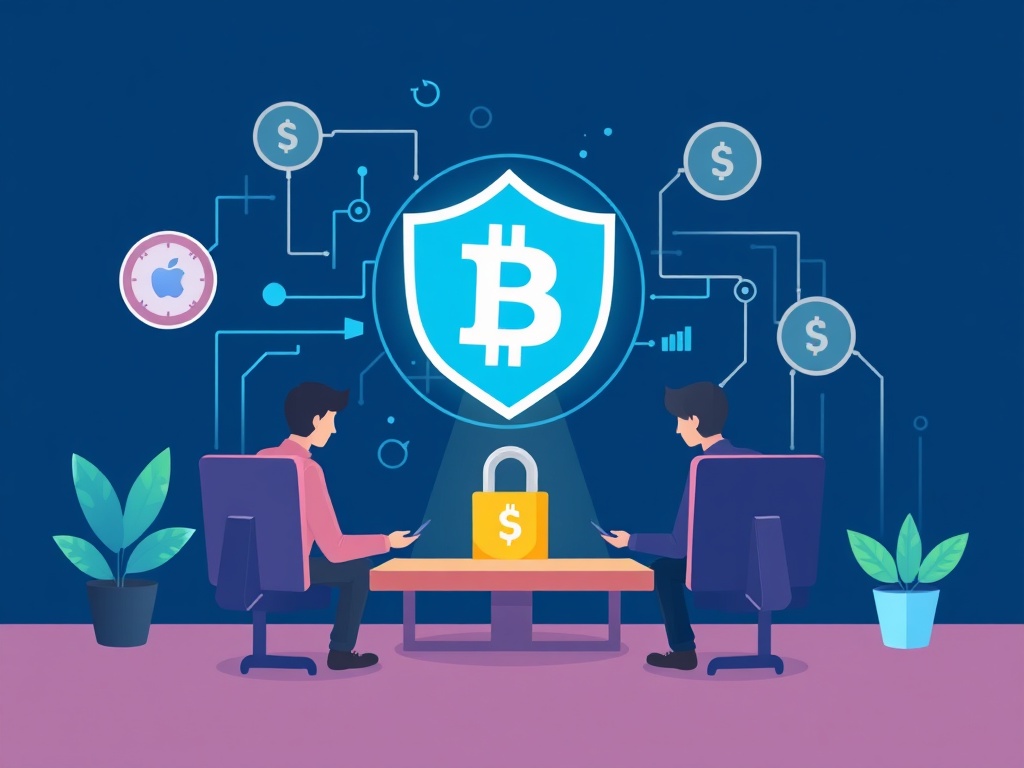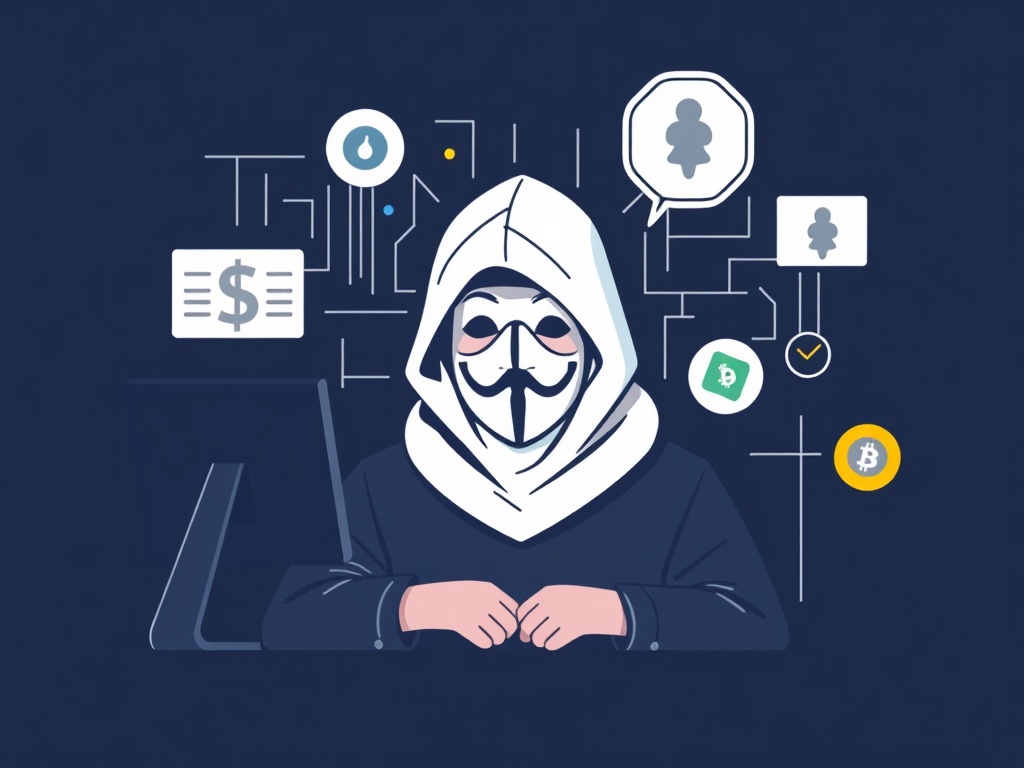
In the evolving landscape of Bitcoin privacy, the concept of an anonymous multisig participant has emerged as a powerful tool for users seeking to enhance their financial anonymity. As governments and corporations increase surveillance over financial transactions, individuals and businesses are turning to advanced cryptographic techniques to protect their privacy. Among these techniques, multisignature (multisig) wallets stand out due to their ability to distribute control across multiple parties, reducing single points of failure and increasing security. When combined with anonymity-focused practices, an anonymous multisig participant can play a pivotal role in safeguarding Bitcoin transactions from prying eyes.
This article explores the intricacies of being an anonymous multisig participant, the benefits it offers, practical implementation strategies, and the broader implications for Bitcoin privacy. Whether you're a privacy advocate, a Bitcoin user, or a developer interested in cryptographic solutions, understanding the role of an anonymous multisig participant is essential in navigating the complexities of decentralized finance securely and privately.
Understanding Multisignature Wallets and Their Core Functionality
Before diving into the specifics of an anonymous multisig participant, it's crucial to grasp what multisignature wallets are and how they operate within the Bitcoin ecosystem. A multisig wallet is a type of digital wallet that requires multiple cryptographic signatures to authorize a transaction. Unlike traditional single-signature wallets, which only need one private key to spend funds, multisig wallets require two or more signatures from distinct private keys. This structure introduces redundancy, security, and collaborative control over funds.
How Multisig Wallets Work in Bitcoin
In Bitcoin, multisig functionality is implemented using Pay-to-Script-Hash (P2SH) or Taproot addresses. These addresses are derived from a script that specifies the conditions under which funds can be spent. For example, a 2-of-3 multisig wallet requires any two of the three private key holders to sign a transaction before it can be broadcast to the network. This setup is particularly useful for:
- Shared custody: Multiple parties can securely manage funds without relying on a single individual.
- Inheritance planning: Funds can be distributed among family members or trusted associates with staggered access.
- Business operations: Companies can implement dual-control mechanisms for corporate treasuries.
- Enhanced security: Reduces the risk of theft from a single compromised private key.
The Role of an Anonymous Multisig Participant
An anonymous multisig participant is an individual or entity that contributes a private key to a multisig wallet without revealing their identity. This anonymity can be achieved through various methods, including the use of pseudonymous identities, coinjoin transactions, or dedicated privacy-focused services. The participant's role is to provide a signature when required, without linking their real-world identity to the wallet's activities. This approach is particularly valuable in scenarios where financial privacy is paramount, such as:
- Whistleblowing: Protecting the identity of individuals exposing corporate or governmental misconduct.
- Journalism: Safeguarding sources who provide sensitive information in exchange for Bitcoin.
- Humanitarian aid: Facilitating anonymous donations to organizations operating in restrictive environments.
- Personal privacy: Preventing tracking of spending habits by third parties.
By participating anonymously in a multisig wallet, individuals can contribute to the security and functionality of the wallet while maintaining their privacy. This dual benefit makes the role of an anonymous multisig participant increasingly relevant in today's digital age.
The Benefits of Being an Anonymous Multisig Participant
Participating as an anonymous multisig participant offers several compelling advantages, particularly for those prioritizing financial privacy and security. Below are the key benefits that make this role attractive to a wide range of users.
Enhanced Financial Privacy
One of the most significant benefits of being an anonymous multisig participant is the ability to conduct Bitcoin transactions without exposing your identity. Traditional Bitcoin transactions are pseudonymous, meaning they are linked to public addresses rather than real-world identities. However, with sufficient on-chain analysis, it's often possible to deanonymize users by tracing transaction patterns, linking addresses to IP addresses, or correlating with off-chain data. Multisig wallets, especially when combined with anonymity techniques, can mitigate these risks.
For example, consider a scenario where an anonymous multisig participant contributes a key to a 2-of-3 wallet. The wallet's address is funded with Bitcoin obtained through coinjoin transactions, which mix the funds with those of other users, obscuring their origin. When a transaction is later signed and broadcast, the on-chain footprint does not directly reveal the participant's identity. This layer of obfuscation makes it significantly harder for third parties to trace the flow of funds back to the participant.
Increased Security Through Distributed Control
Security is a top concern for Bitcoin users, and multisig wallets address this by distributing control across multiple parties. An anonymous multisig participant adds an additional layer of security by ensuring that no single entity has full control over the funds. This distributed model reduces the risk of theft, loss, or unauthorized access. For instance:
- Protection against key compromise: If one private key is stolen or lost, the funds remain secure as long as the other required signatures are not compromised.
- Resistance to coercion: In scenarios where an individual might be forced to surrender their private key, the presence of an anonymous participant complicates such attempts.
- Redundancy: Multiple participants can act as backups, ensuring that funds can still be accessed even if one party is unavailable.
By participating anonymously, the individual also avoids becoming a target for attackers who might otherwise focus on high-value single-signature wallets.
Compliance with Privacy-Centric Financial Practices
For users who prioritize privacy as a fundamental right, being an anonymous multisig participant aligns with broader ethical and philosophical goals. In an era where financial surveillance is becoming increasingly pervasive, tools like multisig wallets empower individuals to take control of their financial data. This is particularly relevant in jurisdictions with intrusive financial regulations or where Bitcoin is used as a tool for censorship resistance.
Moreover, anonymous multisig participation can be integrated with other privacy-enhancing technologies, such as:
- Coinjoin services: Mixing Bitcoin with other users to break transaction links.
- Lightning Network: Conducting off-chain transactions to reduce on-chain footprint.
- Stealth addresses: Generating unique addresses for each transaction to prevent address reuse.
- Tor or VPNs: Masking IP addresses when interacting with the Bitcoin network.
By combining these tools with the role of an anonymous multisig participant, users can achieve a level of financial privacy that is difficult to replicate with traditional banking systems.
Supporting Decentralization and Censorship Resistance
Bitcoin's core ethos revolves around decentralization and censorship resistance. An anonymous multisig participant contributes to this ethos by ensuring that no single entity has unilateral control over funds. This decentralization extends beyond individual wallets to the broader Bitcoin network, as it reduces the concentration of power in the hands of a few large holders or custodians.
Additionally, anonymous multisig participation can help resist financial censorship. In regions where governments or financial institutions block or seize funds based on political or ideological grounds, multisig wallets with anonymous participants can provide a lifeline. For example, a journalist in an oppressive regime might use a multisig wallet with participants from different countries to ensure that funds remain accessible even if one jurisdiction attempts to freeze the assets.
How to Become an Anonymous Multisig Participant: A Step-by-Step Guide
Becoming an anonymous multisig participant requires careful planning and execution to ensure that your identity remains protected. Below is a comprehensive guide outlining the steps involved in participating anonymously in a multisig wallet.
Step 1: Choose the Right Multisig Wallet
The first step is selecting a wallet that supports multisig functionality and prioritizes privacy. Some of the most reputable options include:
- Wasabi Wallet: A privacy-focused Bitcoin wallet that supports coinjoin and can be used in conjunction with multisig setups.
- Electrum: A versatile wallet with advanced features, including multisig support and integration with hardware wallets.
- Sparrow Wallet: A desktop wallet designed for privacy and security, with robust multisig capabilities.
- Coldcard: A hardware wallet that supports multisig and is known for its air-gapped signing process.
When choosing a wallet, prioritize those that offer:
- Open-source code: Ensures transparency and reduces the risk of hidden backdoors.
- Tor support: Allows you to interact with the Bitcoin network without exposing your IP address.
- Coinjoin integration: Facilitates the mixing of funds to enhance privacy before participating in a multisig wallet.
- Hardware wallet compatibility: Enables secure storage of private keys offline.
Step 2: Generate and Secure Your Private Key
As an anonymous multisig participant, your private key is your most valuable asset. It must be generated and stored securely to prevent loss or theft. Follow these best practices:
- Use a secure entropy source: Generate your private key using a trusted random number generator. Avoid using predictable sources like keyboard inputs or simple phrases.
- Store the key offline: Keep your private key in cold storage, such as a hardware wallet, paper wallet, or encrypted USB drive. Avoid storing it on internet-connected devices.
- Use a passphrase: Add a strong passphrase to your private key to provide an additional layer of security. This passphrase should be memorized or stored in a secure offline location.
- Backup your key: Create multiple encrypted backups of your private key and store them in separate physical locations to protect against loss or damage.
- Coordinate with other participants: Identify the other parties involved in the multisig wallet and agree on the wallet's configuration (e.g., 2-of-3, 3-of-5). Ensure that all participants understand their roles and responsibilities.
- Exchange public keys: Each participant must share their public key (derived from their private key) with the others. This is done without revealing their identity or private key. Public keys can be exchanged via secure channels, such as encrypted messaging apps or dedicated privacy-focused platforms.
- Create the multisig wallet: Using a multisig-compatible wallet, combine the public keys of all participants to generate the multisig address. This address will be used to receive funds.
- Fund the wallet: Deposit Bitcoin into the multisig address. To enhance privacy, consider using coinjoin services or other mixing techniques to obscure the source of the funds.
- Test the setup: Before committing significant funds, test the wallet by sending a small amount of Bitcoin and verifying that the required signatures are correctly generated and combined.
- Using pseudonymous identities: Create separate identities for each multisig wallet you participate in. Avoid reusing usernames, email addresses, or other identifiers across different wallets.
- Masking your IP address: Use Tor, a VPN, or a proxy to interact with the Bitcoin network. This prevents third parties from associating your IP address with the wallet's transactions.
- Conducting transactions in private: Avoid discussing your multisig participation on public forums or social media. Even seemingly innocuous details can be used to deanonymize you.
- Receive the unsigned transaction: The transaction details are shared with you via a secure channel. Ensure that the transaction is legitimate and that you are comfortable with the amount and recipients involved.
- Sign the transaction offline: Use your offline device (e.g., hardware wallet or air-gapped computer) to sign the transaction. This prevents exposure to online threats.
- Transmit the signed transaction: Once signed, transmit the transaction back to the coordinator or directly to the Bitcoin network. Use Tor or a VPN to mask your IP address during this process.
- Verify the transaction: After the transaction is broadcast, verify its inclusion in a Bitcoin block using a block explorer. Ensure that the transaction was executed as intended and that no sensitive information was exposed.
- Rotate your identities: Use different pseudonymous identities for each multisig wallet you participate in. Avoid reusing addresses, usernames, or other identifiers.
- Monitor transaction patterns: Regularly review the wallet's transaction history to ensure that no patterns emerge that could link your identity to the wallet. For example, avoid making transactions at predictable times or in predictable amounts.
- Use dedicated devices: Consider using a separate device (e.g., a dedicated laptop or smartphone) for interacting with multisig wallets. This reduces the risk of cross-contamination with other activities that might expose your identity.
- Stay updated on privacy tools: The landscape of Bitcoin privacy tools is constantly evolving. Stay informed about new developments, such as improved coinjoin implementations or privacy-focused wallets, and integrate them into your workflow as needed.
- Avoid discussing your participation: Even with trusted individuals, avoid discussing your role as an anonymous multisig participant. The fewer people who know, the lower the risk of accidental disclosure.
- Key management: Generating, storing, and backing up multiple private keys securely can be daunting, especially for users unfamiliar with cryptographic best practices.
- Transaction coordination: Coordinating signatures among multiple participants requires clear communication and careful planning. Missteps in this process can lead to failed transactions or loss of funds.
- Wallet compatibility: Not all wallets support multisig, and those that do may have varying levels of user-friendliness. Users must carefully select wallets that align with their technical capabilities and privacy needs.
- Recovery procedures: If a participant loses access to their private key or becomes unavailable, the remaining participants must have a predefined recovery plan to regain control of the funds.
-
 James RichardsonSenior Crypto Market Analyst
The Role and Risks of the Anonymous Multisig Participant in Digital Asset Security
As a Senior Crypto Market Analyst with over a decade of experience in digital asset markets, I’ve observed that the concept of an anonymous multisig participant introduces both innovative security solutions and significant operational challenges. Multisignature (multisig) wallets, which require multiple private key holders to authorize a transaction, are widely regarded as a best practice for safeguarding large crypto holdings. However, when one or more of those key holders operate anonymously—whether as a service provider, a decentralized autonomous organization (DAO) member, or an unknown third party—the inherent trust assumptions of multisig security begin to erode. From a risk management perspective, anonymity in multisig setups introduces uncertainty around the counterparty’s identity, intent, and long-term reliability. While privacy is a legitimate concern in certain jurisdictions or use cases, the lack of transparency can complicate dispute resolution, regulatory compliance, and even the recovery of funds in the event of key loss or malicious behavior.
In practice, the integration of an anonymous multisig participant should be approached with extreme caution, particularly in institutional or high-value environments. My analysis of DeFi hacks and custodial failures over the years consistently highlights that the most resilient multisig configurations are those where all participants are known, vetted, and bound by contractual or reputational obligations. For example, in traditional finance, joint accounts or corporate treasuries rely on identifiable signatories to mitigate fraud and ensure accountability. Similarly, in crypto, the use of multisig with anonymous participants—such as those found in some DAO treasuries or privacy-focused protocols—should be complemented by additional safeguards: time-locked transactions, threshold-based recovery mechanisms, and, where possible, on-chain identity attestations. Ultimately, while anonymity can serve legitimate privacy goals, it must not come at the expense of security. Institutions and sophisticated users should prioritize transparency in multisig arrangements to maintain operational integrity and reduce systemic risk.
For maximum anonymity, consider generating your private key in an offline environment, such as a Raspberry Pi running a minimal operating system or a dedicated air-gapped computer. This reduces the risk of malware or keyloggers compromising your key generation process.
Step 3: Participate in a Multisig Wallet Setup
Once you have generated and secured your private key, the next step is to participate in a multisig wallet setup. This process typically involves the following steps:
As an anonymous multisig participant, it's essential to avoid linking your identity to the wallet's activities. This can be achieved by:
Step 4: Signing Transactions Anonymously
When a transaction needs to be signed by an anonymous multisig participant, follow these steps to maintain your privacy:
For added security, consider using a multi-signature transaction coordinator service that allows you to sign transactions without revealing your IP address or other identifying information. Some wallets, like Sparrow, offer built-in features to facilitate anonymous signing.
Step 5: Maintaining Anonymity Over Time
Anonymity is not a one-time effort but an ongoing process. As an anonymous multisig participant, you must remain vigilant to avoid inadvertently revealing your identity. Here are some tips to maintain your privacy:
Common Challenges and Risks for Anonymous Multisig Participants
While the role of an anonymous multisig participant offers significant benefits, it is not without its challenges and risks. Understanding these potential pitfalls is essential for anyone considering participation in a multisig wallet while maintaining anonymity.
Technical Complexity and User Error
Multisig wallets are inherently more complex than single-signature wallets, and this complexity increases when anonymity is a priority. Common technical challenges include:
To mitigate these risks, users should thoroughly research and test their chosen wallet and setup before committing significant funds. Participating in multisig wallet communities, such as those on BitcoinTalk or GitHub, can provide valuable insights and support.
Privacy Leaks and De-anonymization Risks
Even with careful planning, there are several ways an anonymous multisig participant might inadvertently leak their identity: