The rapid evolution of blockchain privacy mechanisms has brought dual key stealth address architectures into the spotlight, particularly within ecosystems focused on confidential transaction routing and asset obfuscation. As surveillance techniques grow more sophisticated, users and developers alike are turning to advanced cryptographic constructs that separate spending authority from address generation. In the btcmixer_en2 niche, the integration of such mechanisms is not merely a technical upgrade—it represents a paradigm shift toward user-centric privacy, where transaction trails are mathematically diluted rather than merely obscured. This article dives deep into the architecture, operational benefits, and practical considerations of dual key stealth address systems, offering a comprehensive guide for developers, researchers, and privacy-conscious participants in the decentralized finance space.
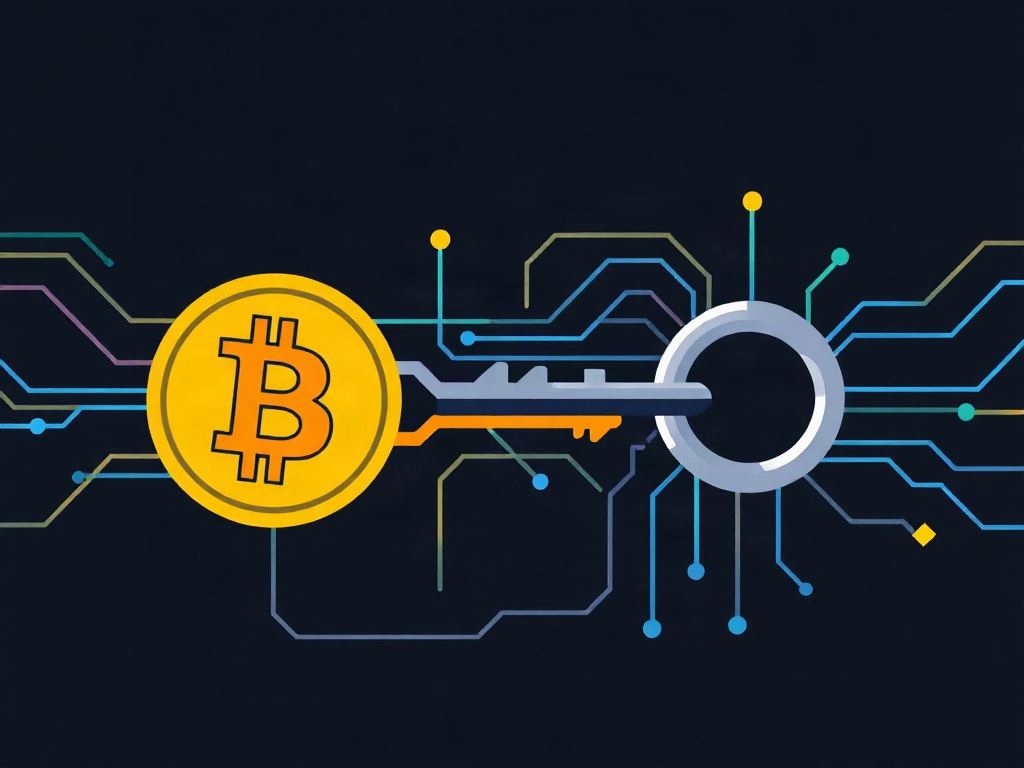
At its core, a dual key stealth address scheme operates on a dual-key model: one key governs the creation of a one-time, ephemeral address for inbound transactions, while the other key authorizes the eventual spending of funds associated with that address. This separation ensures that even if a single key is compromised, the overall privacy posture of the user remains intact. Unlike traditional stealth addresses that rely on a single private key for both derivation and expenditure, the dual-key approach introduces a layered security model that aligns well with the risk mitigation strategies employed by modern mixing platforms. The btcmixer_en2 framework, for instance, has begun experimenting with these primitives to enhance its tumbling algorithms, thereby reducing the likelihood of address clustering analysis.
The Cryptographic Foundations of Dual Key Stealth Addresses
Understanding the mathematics behind a dual key stealth address begins with elliptic curve cryptography (ECC) and the concept of one-time public keys. In a typical single-key stealth address flow, a sender uses the recipient's public key to compute a one-time address via a hash of the transaction metadata. However, this model suffers from key-reuse vulnerabilities if the recipient's static key is exposed. The dual-key variant splits the recipient's master key into two distinct components: a derivation key and a spending key. The derivation key is publicly shareable and used exclusively to generate one-time addresses, while the spending key remains offline or in a secure enclave, used solely when the user wishes to move funds.
This architectural split provides several security advantages. First, it eliminates the need for the recipient to expose a long-term private key during the receipt phase, drastically reducing the attack surface. Second, it enables stateless address generation, where the recipient can generate an unlimited number of one-time addresses without ever revealing their master derivation key. Third, it supports recoverable key hierarchies, meaning that if a user loses access to one component, the other can potentially be restored through predefined backup mechanisms, a feature particularly valuable in institutional-grade btcmixer_en2 deployments where key management policies are stringent.
From a protocol perspective, the process unfolds in three logical stages. During the initialization phase, the recipient generates a pair of asymmetric keys: K_derivation and K_spending. The derivation key is shared openly, often via a QR code or URI scheme, while the spending key is stored in a hardware wallet or encrypted keystore. In the receipt phase, any party wishing to send funds uses the shared derivation key combined with the transaction's unique nonce (such as a timestamp or transaction ID) to compute a one-time public address. This address is mathematically unlinkable to any other address generated for the same recipient. Finally, in the spending phase, the holder of the spending key proves ownership of the one-time address by presenting a signature that references both the one-time public key and the spending key, thereby authorizing the transfer without exposing the derivation key.
Key Generation and Entropy Considerations
Security of any dual key stealth address scheme hinges on the quality of randomness employed during key generation. Entropy deficiencies can lead to address collisions or, worse, deterministic address derivation that undermines the entire privacy guarantee. Best practices dictate the use of cryptographically secure random number generators (CSPRNGs) seeded with at least 256 bits of entropy. Furthermore, the derivation key should be generated via a key derivation function (KDF) such as HKDF or PBKDF2, incorporating a unique salt per user to prevent cross-user key reuse attacks. In the context of btcmixer_en2 integrations, developers are advised to audit their entropy sources regularly, particularly when deploying these schemes on resource-constrained devices or embedded systems.
Address Encoding and Interoperability
Another critical aspect is the encoding format of the one-time addresses generated by a dual key stealth address protocol. Standardization ensures that wallets, explorers, and mixing services can interpret and validate addresses without custom parsers. Many implementations opt for Bech32 or Bech32m encoding, which offers human-readable prefixes, error detection, and backward compatibility with legacy systems. However, the dual-key nature necessitates a subtle extension to these formats, typically involving a version byte or a separate field to distinguish between the derivation and spending components. Interoperability tests between different wallet vendors are essential to prevent fragmentation, especially as btcmixer_en2 seeks to onboard a diverse user base across multiple platforms and jurisdictions.
btcmixer_en2 Integration: Privacy Enhancements and Operational Realities
The btcmixer_en2 ecosystem has positioned itself at the forefront of privacy-preserving transaction infrastructure, and the adoption of dual key stealth address mechanics represents a natural extension of its mission. By incorporating these addresses into its core routing layer, btcmixer_en2 can offer users a higher degree of anonymity set expansion, as each incoming transaction lands on a uniquely generated, one-time address that cannot be traced back to a common source. This is particularly beneficial for users engaging in cross-chain swaps, decentralized exchange (DEX) trades, or peer-to-peer transfers where traditional address reuse would otherwise create a deterministic linkage graph.
Operationally, the integration process involves several moving parts. On the sender side, the mixing service must be capable of generating or accepting one-time addresses derived from the recipient's dual-key parameters. This requires the service to either store recipient public parameters securely or rely on a decentralized key directory. On the recipient side, wallet software must be updated to support the dual-key derivation flow, including QR code generation for the derivation key and secure storage protocols for the spending key. While the user experience impact is minimal—most users will interact with the system via familiar QR code scanning—the underlying infrastructure demands rigorous testing and audit.
One of the most compelling use cases within btcmixer_en2 is the mitigation of chain analysis techniques such as taint analysis and address clustering. In a conventional mixing scenario, funds from multiple users are pooled and redistributed, but sophisticated analysts can still trace the flow by identifying common input-output patterns. With dual key stealth addresses, each user's funds arrive at distinct, one-time addresses, effectively breaking the clustering link before the mixing process even begins. This pre-mixing privacy layer acts as a force multiplier for the tumbler's own obfuscation capabilities, resulting in a compounded anonymity set that is significantly larger and more resistant to heuristic analysis.
However, the transition is not without challenges. A primary concern is the usability gap: users accustomed to simple address copying may find the dual-step key management process unintuitive. To address this, btcmixer_en2 is exploring wallet-as-a-service (WaaS) models that abstract the dual-key complexity behind seamless UI flows, such as single-tap address generation and automatic key rotation. Additionally, regulatory compliance remains a delicate balance; while the technology enhances privacy, it must not facilitate illicit activity. Implementing optional transparency modes, where users can voluntarily reveal spending keys for audit purposes, is one approach being piloted within the community.
User Education and Adoption Barriers
Adopting a dual key stealth address framework requires a shift in how users conceptualize address ownership and transaction privacy. Traditional mindsets equate an address with a permanent identity on the blockchain, whereas the dual-key model treats addresses as ephemeral tokens valid for a single inbound transaction. Education initiatives must focus on explaining the "why" behind this shift: how the separation of derivation and spending keys protects against key-exposure attacks, and how the one-time nature of addresses prevents long-term tracking. Community-driven tutorials, documentation portals, and interactive simulators can lower the entry barrier, particularly for non-technical users who form the majority of the btcmixer_en2 user base.
Performance Metrics and Throughput Impact
From a technical standpoint, any privacy enhancement introduces computational overhead, and the dual key stealth address model is no exception. The additional elliptic curve point multiplication required for one-time address derivation, combined with the signature validation during spending, can increase transaction processing time by a modest margin—typically in the range of 10 to 30 milliseconds per operation on modern hardware. While this is negligible for most users, high-frequency traders or automated mixing bots may need to optimize their node configurations or leverage hardware acceleration features. Empirical data from btcmixer_en2 testnets indicates that the throughput impact is linear and scalable, meaning that as network participation grows, the per-transaction cost remains consistent, a positive sign for mass adoption.
Security Model Analysis and Threat Mitigation
Any discussion of dual key stealth address implementations must encompass the associated security model and potential threat vectors. The dual-key design inherently mitigates the risk of a single point of failure: compromise of the derivation key alone does not expose funds, as the spending key remains a separate, often offline, component. However, threat actors may attempt social engineering attacks targeting the spending key, or exploit implementation bugs in the address derivation logic. A comprehensive security audit should therefore cover not only the cryptographic algorithms but also the key management workflows, including backup procedures, multi-signature requirements, and hardware wallet integrations.
One emerging threat specific to dual-key systems is the key linkage attack, where an adversary attempts to correlate the derivation key's usage patterns with the spending key's activation events. While the one-time address generation ensures that no two transactions share the same public address, metadata such as transaction timing, amounts, and network propagation patterns could still leak information. Countermeasures include the use of transaction batching services, time-delay

Understanding the dual key stealth address model for DeFi privacy
As someone who spends considerable time analyzing the architecture of decentralized finance protocols, I've watched the evolution of transaction privacy with keen interest. The introduction of the dual key stealth address model represents a significant leap forward for users who require both anonymity and auditability on-chain. Unlike traditional stealth addresses that rely on a single private key, this dual-key approach splits control between a viewing key and a spending key, effectively mitigating the risk of key compromise while preserving the ability to prove fund ownership when needed.
From a practical standpoint, the dual key stealth address architecture addresses two of the most persistent pain points in Web3: user-controlled privacy and regulatory compliance. The viewing key allows third-party observers, such as auditors or tax reporting tools, to verify incoming transactions without ever accessing the ability to move assets. Meanwhile, the spending key remains under the sole custody of the holder, ensuring that no external party can initiate outbound transfers. This separation not only reduces the attack surface for phishing and social engineering but also opens the door for more sophisticated liquidity mining strategies where participants can prove participation without exposing their full transaction history.
Looking ahead, I believe the dual key stealth address model will see rapid adoption among institutional DeFi participants and privacy-conscious retail users alike, particularly as layer-2 scaling solutions demand lighter privacy primitives. Protocols that integrate this mechanism natively will likely gain a competitive edge in user trust and on-chain transparency, especially in an ecosystem increasingly scrutinized by both regulators and power users. For anyone building or allocating capital in the next generation of Web3 infrastructure, understanding and evaluating dual key stealth address support should be a baseline criterion.