In the rapidly evolving world of cryptocurrency, privacy and security remain paramount concerns for traders and investors. As governments and financial institutions increase their scrutiny over digital transactions, the demand for private BTC exchange platforms has surged. These specialized exchanges offer users the ability to trade Bitcoin without revealing their identities or transaction histories, ensuring a higher degree of anonymity and protection from prying eyes.
A private BTC exchange is not just another trading platform; it is a sanctuary for those who prioritize financial privacy. Unlike traditional exchanges that require extensive KYC (Know Your Customer) and AML (Anti-Money Laundering) compliance, private exchanges operate with minimal or no identity verification. This allows users to buy, sell, or swap Bitcoin while maintaining their anonymity. In this comprehensive guide, we will explore what a private BTC exchange is, how it works, its benefits and risks, and how to choose the best platform for your needs.
The Rise of Private BTC Exchanges: Why Privacy Matters in Bitcoin Trading
The Bitcoin network, while transparent and immutable, is not inherently anonymous. Every transaction is recorded on the blockchain, which is publicly accessible. While Bitcoin addresses do not directly reveal the identity of users, sophisticated analysis techniques can link transactions to real-world identities through IP tracking, exchange records, and other metadata. This is where a private BTC exchange becomes invaluable.
How Traditional Exchanges Compromise Privacy
Most mainstream cryptocurrency exchanges, such as Coinbase, Binance, or Kraken, require users to submit government-issued IDs, proof of address, and even facial recognition scans. While this is necessary for regulatory compliance, it creates a centralized repository of user data that can be vulnerable to breaches, hacks, or government subpoenas. Once your identity is linked to your Bitcoin addresses, your entire transaction history becomes traceable.
Moreover, these exchanges often share user data with third parties, including tax authorities and financial intelligence units. For individuals who value financial sovereignty, this level of exposure is unacceptable. A private BTC exchange circumvents these issues by eliminating the need for identity verification, allowing users to trade Bitcoin without leaving a digital footprint.
The Growing Demand for Anonymity in Crypto
The desire for privacy is not just about evading regulations; it is about personal freedom and security. In countries with oppressive financial policies, such as Venezuela, Nigeria, or Russia, citizens use Bitcoin to preserve their wealth and avoid capital controls. A private BTC exchange enables them to transact without fear of government retaliation or asset seizure.
Additionally, privacy-conscious investors, such as high-net-worth individuals, entrepreneurs, and even corporations, use private exchanges to protect their financial strategies from competitors and adversaries. The rise of decentralized finance (DeFi) and peer-to-peer (P2P) trading has further fueled the demand for private BTC exchange platforms that prioritize user anonymity.
How a Private BTC Exchange Works: The Technology Behind Anonymous Trading
A private BTC exchange leverages several technologies and methodologies to ensure that users can trade Bitcoin without revealing their identities. Understanding these mechanisms is crucial for anyone considering using such a platform.
Peer-to-Peer (P2P) Trading Networks
Most private BTC exchanges operate as decentralized or semi-decentralized P2P networks. Unlike centralized exchanges, which act as intermediaries holding user funds, P2P platforms connect buyers and sellers directly. This eliminates the need for a trusted third party, reducing the risk of hacks or exit scams.
Examples of P2P private BTC exchange platforms include Bisq, Hodl Hodl, and LocalBitcoins (though the latter has faced regulatory pressure in some regions). These platforms allow users to set their own terms, including price, payment method, and privacy preferences. Transactions are escrowed, meaning the Bitcoin is held in a multi-signature wallet until both parties fulfill their obligations.
CoinJoin and Mixing Services
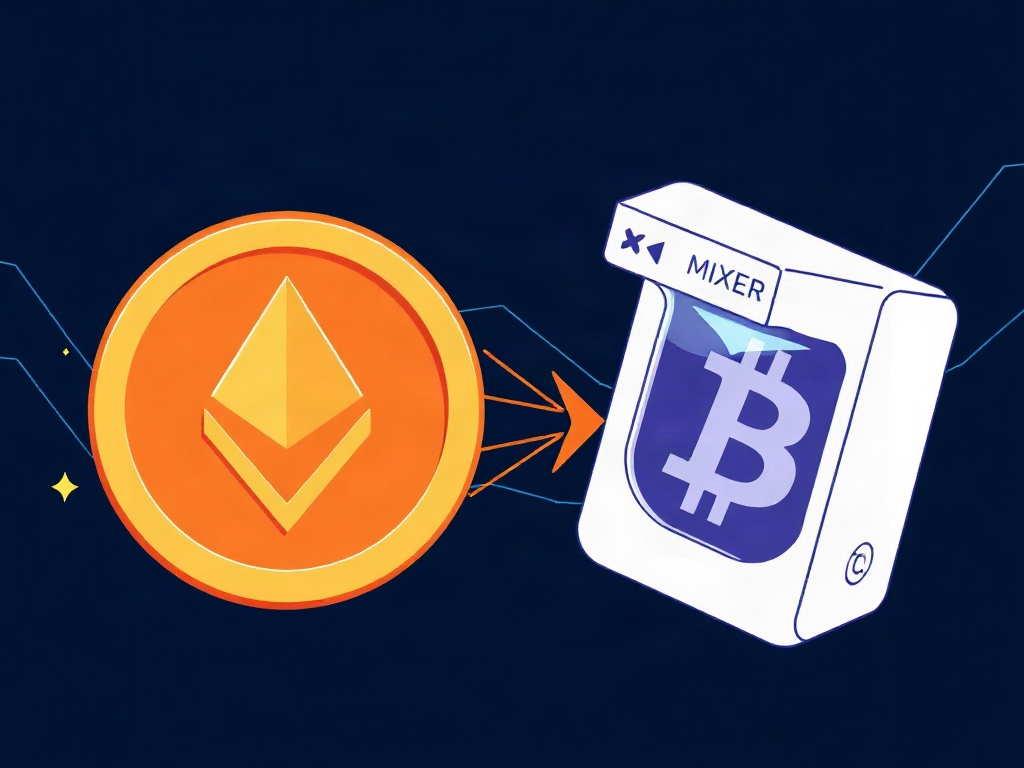
Another key technology used by private BTC exchanges is CoinJoin, a privacy-enhancing technique that combines multiple transactions into a single batch. This obfuscates the trail of individual transactions, making it difficult to trace the flow of Bitcoin from sender to receiver.
Some private exchanges integrate CoinJoin directly into their platforms, allowing users to mix their coins before trading. This adds an extra layer of privacy, especially when dealing with large amounts of Bitcoin. Services like Wasabi Wallet and Samourai Wallet offer built-in CoinJoin functionality, which can be used in conjunction with a private BTC exchange for enhanced anonymity.
Atomic Swaps and Decentralized Exchanges (DEXs)
Atomic swaps enable users to exchange Bitcoin for other cryptocurrencies without relying on a centralized exchange. This technology uses smart contracts to ensure that both parties receive their funds simultaneously, eliminating the risk of one party failing to deliver. Platforms like Bisq and Komodo use atomic swaps to facilitate private BTC exchange transactions.
Decentralized exchanges (DEXs) like Bisq and Bisq DAO take privacy a step further by operating entirely on-chain, with no central authority controlling user funds. These platforms are censorship-resistant and do not require KYC, making them ideal for those seeking a truly private BTC exchange experience.
Stealth Addresses and Confidential Transactions
Some advanced private exchanges use stealth addresses, a feature borrowed from Monero, to enhance Bitcoin privacy. Stealth addresses generate a unique, one-time address for each transaction, preventing anyone from linking past and future transactions to a single wallet. While Bitcoin does not natively support stealth addresses, layer-two solutions and sidechains (such as Liquid Network) are exploring ways to integrate this technology.
Confidential transactions, another privacy feature, hide the amount being transacted while still allowing the network to verify the transaction’s validity. Although Bitcoin does not support confidential transactions natively, research into privacy-preserving technologies continues to evolve.
Benefits of Using a Private BTC Exchange
Opting for a private BTC exchange offers several advantages over traditional trading platforms. Below are the key benefits that make these exchanges appealing to privacy-conscious users.
Enhanced Financial Privacy
The most obvious benefit of a private BTC exchange is the preservation of financial privacy. By avoiding KYC requirements, users can trade Bitcoin without revealing their identities to governments, corporations, or malicious actors. This is particularly important for individuals living in countries with strict financial surveillance or those who wish to keep their investment strategies confidential.
Protection Against Censorship
Centralized exchanges can freeze accounts, block transactions, or comply with government orders to seize funds. In contrast, a private BTC exchange operates in a decentralized manner, making it nearly impossible for authorities to censor or freeze transactions. This censorship resistance is a core principle of Bitcoin and is preserved in private exchanges.
For example, during periods of political unrest or economic instability, governments may impose capital controls or restrict access to banking services. A private BTC exchange allows users to bypass these restrictions and maintain control over their wealth.
Reduced Risk of Hacks and Data Breaches
Centralized exchanges are prime targets for hackers due to the vast amounts of user data and funds they hold. High-profile breaches, such as the Mt. Gox hack in 2014 or the more recent KuCoin hack in 2020, have resulted in billions of dollars in losses. By using a private BTC exchange, users retain control of their funds in non-custodial wallets, significantly reducing the risk of large-scale theft.
Even if a P2P platform is compromised, the decentralized nature of the network means that the impact is limited to individual users rather than the entire platform. This distributed risk model enhances security and peace of mind.
Lower Fees and Greater Flexibility
Many private BTC exchanges operate with lower fees compared to centralized platforms. Since there is no need for extensive compliance infrastructure or customer support, operational costs are reduced. Additionally, users can negotiate prices directly with counterparties, often resulting in better rates than those offered by traditional exchanges.
Private exchanges also allow for greater flexibility in payment methods. While traditional exchanges primarily support bank transfers and credit cards, private platforms often accept cash, gift cards, PayPal, and even barter arrangements. This versatility makes it easier for users to acquire Bitcoin without leaving a digital trail.
Support for Large Transactions
Due to KYC and AML regulations, many centralized exchanges impose limits on the size of transactions or require additional verification for large trades. A private BTC exchange eliminates these restrictions, allowing users to trade large amounts of Bitcoin without scrutiny. This is particularly beneficial for institutional investors, whales, and businesses that need to move significant capital discreetly.
Potential Risks and Challenges of Private BTC Exchanges
While the benefits of a private BTC exchange are compelling, it is essential to acknowledge the risks and challenges associated with these platforms. Understanding these drawbacks will help users make informed decisions and mitigate potential pitfalls.
Scams and Fraudulent Platforms
The lack of regulation in the private BTC exchange space makes it a breeding ground for scams. Fraudulent platforms may promise anonymity and low fees but disappear with user funds once deposits are made. To avoid falling victim to such schemes, users should conduct thorough research, read reviews, and only use reputable platforms with a proven track record.
Some red flags to watch for include:
- Platforms that do not provide clear information about their team or operational history.
- Exchanges that require upfront payments or deposits before allowing trades.
- Platforms with no escrow system or dispute resolution mechanism.
- Websites with poor security measures, such as lack of HTTPS encryption.
Liquidity Issues
Private BTC exchanges often suffer from lower liquidity compared to centralized platforms. Since trading volumes are smaller and the user base is more niche, it may take longer to find a suitable counterparty for large transactions. This can result in price slippage or difficulty executing trades at desired rates.
To mitigate this issue, users can:
- Use multiple private exchanges to increase their chances of finding a match.
- Set limit orders instead of market orders to avoid unfavorable price movements.
- Monitor trading volumes and liquidity on platforms like CoinGecko or CoinMarketCap.
Regulatory Uncertainty
While private exchanges operate in a regulatory gray area, governments are increasingly cracking down on platforms that facilitate anonymous trading. Some jurisdictions have banned P2P trading outright, while others impose strict regulations on crypto-to-fiat transactions. Users in these regions may face legal risks when using a private BTC exchange.
For example, in 2021, the U.S. Financial Crimes Enforcement Network (FinCEN) proposed stricter rules for P2P crypto transactions, requiring exchanges to collect and report user data. Such regulations could force private exchanges to either comply or shut down, reducing the availability of truly anonymous trading options.
Technical Complexity
Private BTC exchanges often require a higher level of technical knowledge compared to traditional platforms. Users must understand concepts like wallet management, transaction fees, and blockchain confirmations to trade safely. Additionally, the use of CoinJoin or stealth addresses adds complexity, which may deter less tech-savvy individuals.
To overcome this challenge, users can:
- Educate themselves on Bitcoin privacy techniques through resources like Bitcoin.org or privacy-focused YouTube channels.
- Use user-friendly wallets and interfaces that simplify the trading process.
- Join online communities, such as BitcoinTalk or Reddit’s r/BitcoinPrivacy, to seek advice from experienced users.
Potential for Human Error
Since private exchanges rely on direct interaction between users, there is a higher risk of human error or miscommunication. For example, a buyer might send funds to the wrong address, or a seller might fail to release Bitcoin after receiving payment. While escrow systems help mitigate this risk, disputes can still arise, and resolving them may be time-consuming.
To minimize errors, users should:
- Double-check wallet addresses and payment details before confirming transactions.
- Use reputable escrow services to ensure funds are held securely until both parties fulfill their obligations.
- Communicate clearly with counterparties to avoid misunderstandings.
Top Private BTC Exchange Platforms in 2024
The private BTC exchange landscape is diverse, with each platform offering unique features and trade-offs between privacy, usability, and liquidity. Below is a curated list of the most reputable and widely used private BTC exchange platforms in 2024.
Bisq (Formerly Bitsquare)
Bisq is one of the oldest and most trusted decentralized exchanges for Bitcoin. It is open-source, peer-to-peer, and requires no KYC. Bisq supports a wide range of payment methods, including bank transfers, cash deposits, and even gift cards. Transactions are escrowed, and the platform uses a security deposit system to deter fraud.
Pros:
- Fully decentralized with no central authority.
- Supports a wide variety of payment methods.
- Strong community and active development.
- No single point of failure or censorship.
Cons:
- Lower liquidity compared to centralized exchanges.
- Slower transaction speeds due to on-chain settlement.
- Requires a security deposit, which can be a barrier for some users.
Hodl Hodl
Hodl Hodl is a P2P Bitcoin exchange that operates as a non-custodial platform, meaning users retain control of their funds throughout the trading process. It supports both Bitcoin-to-fiat and Bitcoin-to-crypto trades, with escrow protection to ensure fair transactions. Hodl Hodl is particularly popular in Europe and Latin America.
Pros:
- No KYC requirements for most trades.
- User-friendly interface with a focus on simplicity.
- Supports multiple fiat currencies and payment methods.
- Strong reputation for security and reliability.
Cons:
- Limited liquidity for some trading pairs.
- Higher fees compared to some other private exchanges.
- Not available in all countries due to regulatory restrictions.
LocalCryptos (Formerly LocalBitcoins)
LocalCryptos is a global P2P marketplace for buying and selling Bitcoin and other cryptocurrencies. While it was once one of the most popular private BTC exchange platforms, it has faced regulatory challenges in recent years, particularly in Europe and the U.S. However, it remains a viable option for users in regions where it is still accessible.
Pros:
- Wide range of payment methods, including cash and online transfers.
- Escrow protection for all trades.
- User ratings and reviews to help assess counterparty reliability.
Cons:
- Increased KYC requirements in some regions.
- Higher risk of scams compared to more decentralized platforms.
- Limited availability in certain countries.
Peach Bitcoin
Peach Bitcoin is a mobile-first P2P Bitcoin exchange that prioritizes privacy and ease of use. It allows users to buy and sell Bitcoin directly with each other, with escrow protection to ensure secure transactions. Peach Bitcoin is particularly popular in Europe and has gained traction for its intuitive design and strong privacy features.
Pros:
- No KYC requirements for most trades.
- Mobile app available for iOS and Android.
- Supports a variety of payment methods, including cash and online transfers.
- Strong focus on user privacy and security.
Cons:
- Limited liquidity for larger trades.
- Primarily focused on European users.
- Smaller user base compared to Bisq or Hodl Hodl.
AgoraDesk (Formerly LocalMonero)
AgoraDesk is a P2P exchange specializing in Monero (XMR) but also supports Bitcoin trading. It is a fork of LocalMonero and operates on a similar model, connecting buyers and sellers directly with escrow protection. AgoraDesk is particularly popular among privacy-focused users who value Monero’s built-in anonymity features.
Pros:
- No KYC requirements for Bitcoin trades.
- Strong focus on privacy and anonymity.
- Supports a variety of payment methods, including cash and online
 James RichardsonSenior Crypto Market Analyst
The Strategic Advantages of a Private BTC Exchange in Institutional Crypto Adoption
As a Senior Crypto Market Analyst with over a decade of experience in digital asset markets, I’ve observed that institutional adoption of Bitcoin (BTC) is accelerating—but not without friction. Traditional exchanges, while liquid, often fall short in addressing the core concerns of institutional investors: custody risk, regulatory opacity, and operational inefficiencies. A private BTC exchange addresses these pain points by offering a controlled, compliant, and bespoke trading environment tailored to high-net-worth individuals, family offices, and corporate treasuries. Unlike public exchanges, these platforms prioritize security through self-custody solutions, reduce counterparty risk via direct peer-to-peer (P2P) settlement, and provide institutional-grade reporting and audit trails. For institutions that view Bitcoin as a strategic reserve asset, a private exchange isn’t just a trading venue—it’s a risk mitigation tool.
From a market structure perspective, private BTC exchanges are emerging as a critical bridge between traditional finance (TradFi) and decentralized finance (DeFi). By integrating institutional-grade liquidity pools with on-chain settlement mechanisms, these platforms enable seamless transitions between fiat and Bitcoin without exposing users to the volatility or regulatory uncertainties of public markets. Moreover, the ability to customize trading parameters—such as slippage tolerance, execution algorithms, and settlement windows—gives institutions the flexibility to align Bitcoin exposure with their risk management frameworks. While public exchanges remain essential for price discovery and retail liquidity, private BTC exchanges are carving out a niche as the preferred infrastructure for large-scale, low-friction Bitcoin transactions. For institutions serious about Bitcoin adoption, the choice isn’t between public or private—it’s about leveraging both in a complementary ecosystem.