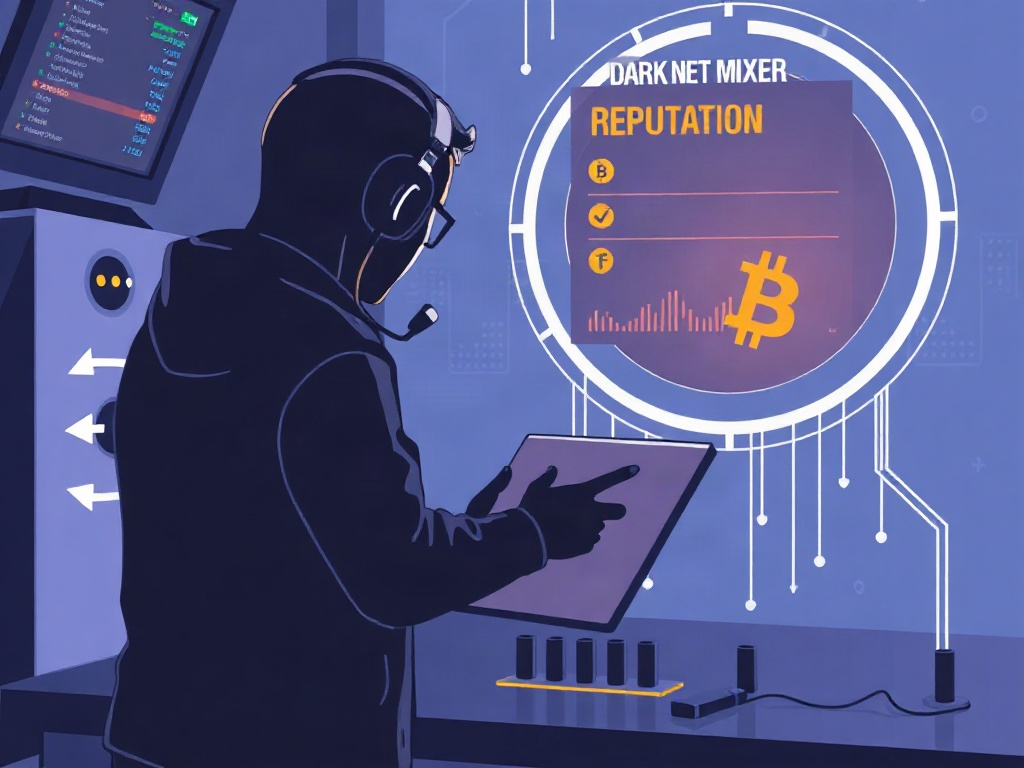
In the rapidly evolving landscape of cryptocurrency mixing and privacy-focused financial services, the integrity of user data stands as the cornerstone of trust. Among the most critical operational concerns for participants on platforms like btcmixer_en2 is the mitigation of digital footprints, particularly through effective ip logging avoidance. Every connection request, transaction broadcast, and interface interaction generates metadata that, if left unmanaged, can be aggregated, analyzed, and potentially exploited. This article provides a deep, practical exploration of how users can safeguard their anonymity, with a specific focus on actionable ip logging avoidance methodologies tailored to the btcmixer_en2 ecosystem.
The concept of ip logging avoidance extends beyond simply hiding one's address; it encompasses a layered defense strategy that addresses network topology, application configuration, and behavioral patterns. For users of btcmixer_en2, whose primary objective is often the preservation of transactional privacy, understanding the mechanics of IP exposure is the first step toward constructing an impenetrable operational security posture. Below, we dissect the anatomy of IP logging, examine the most robust evasion techniques, and integrate these practices seamlessly into the daily workflow of the discerning btcmixer_en2 participant.
Understanding IP Logging in the btcmixer_en2 Environment
Every time a user accesses btcmixer_en2, the server records the originating IP address as part of standard web infrastructure logging. This data point, while seemingly innocuous, becomes a potent identifier when correlated with transaction timestamps, wallet interactions, and withdrawal patterns. In the context of cryptocurrency mixing, where the objective is to sever the link between sender and receiver, any retained IP information undermines the very purpose of the service. The btcmixer_en2 platform, like many of its peers, employs logging for operational maintenance, security monitoring, and abuse prevention; however, the onus lies on the user to ensure that their inbound connection does not originate from a traceable source.
The risks associated with inadequate ip logging avoidance are multifaceted. Law enforcement agencies, malicious actors, and even data brokers can leverage logged IPs to map user behavior, infer financial habits, or construct profiles for targeted phishing campaigns. Moreover, within the btcmixer_en2 community, the inadvertent exposure of an IP address can compromise the mixing process, potentially allowing external parties to deanonymize transactions through traffic analysis. Consequently, a proactive approach to IP obfuscation is not merely recommended—it is imperative for maintaining the confidentiality guarantees that users expect from privacy-centric mixing services.
Technically, IP logging occurs at the gateway level. When a request travels from a client device to the btcmixer_en2 servers, the TCP/IP stack transmits the source address as a header component. Even if the platform itself does not store this data long-term, intermediate nodes, ISPs, and network administrators may retain records. This reality underscores the necessity of employing ip logging avoidance strategies at the earliest point of egress, ensuring that the IP address visible to btcmixer_en2 is either masked, routed through anonymizing infrastructure, or entirely absent.
Foundational IP Logging Avoidance Techniques
The most accessible entry point into effective ip logging avoidance is the utilization of established anonymizing networks. The Tor network, for instance, routes traffic through a minimum of three relays, stripping away direct attribution and replacing it with a exit node IP that is decoupled from the user's true identity. For btcmixer_en2 users, connecting via the Tor Browser or a system-level SOCKS5 proxy configured for Tor routing provides a foundational shield. This method ensures that the platform logs an exit node IP rather than the user's real address, a simple yet powerful step toward preserving anonymity.
Another cornerstone of ip logging avoidance involves the strategic use of Virtual Private Networks (VPNs). Unlike free or low-quality services that may log and sell user data, reputable VPNs with strict no-logs policies and RAM-only servers offer a viable layer of obfuscation. When configuring a VPN for use with btcmixer_en2, users should prioritize features such as kill switches, DNS leak protection, and IPv6 disabling to prevent accidental exposure. The synergy between a trusted VPN and the Tor network—often referred to as "Tor over VPN"—can further amplify privacy, as the ISP only sees encrypted VPN traffic, while btcmixer_en2 observes a Tor exit node.
Beyond network-level tools, local system configuration plays a pivotal role in ip logging avoidance. Disabling WebRTC in browsers prevents STUN/TURN requests from revealing local and public IPs through JavaScript APIs. Similarly, clearing cookies, canvas fingerprints, and other tracking vectors ensures that even if an IP were logged, it would be difficult to correlate with other browser identifiers. For the technically inclined, employing containerized environments or dedicated virtual machines for btcmixer_en2 access creates a clean slate for each session, eliminating persistent local artifacts that could facilitate deanonymization.
Network-Level Shielding
Implementing network-level shielding is a critical component of a comprehensive ip logging avoidance strategy. By configuring a home router to use DNS-over-HTTPS (DoH) or DNS-over-TLS (DoT), users can prevent ISPs from observing the domains they query, including connections to btcmixer_en2 infrastructure. Additionally, enabling firewall rules that block outbound connections from unknown or unexpected sources mitigates the risk of background applications leaking the real IP address while the user is engaged in mixing activities.
Application-Level Configuration
At the application layer, users must scrutinize the settings of any client software used to interface with btcmixer_en2. Many cryptocurrency wallets and mixing interfaces offer built-in options to route traffic through proxy servers or Tor. Activating these features, and verifying that the actual exit IP matches the expected anonymizing node, is essential. Furthermore, disabling automatic update mechanisms that might phone home without the VPN or Tor active ensures that update requests do not circumvent the established ip logging avoidance tunnel.
Advanced IP Logging Avoidance for Power Users
For power users and operational security enthusiasts, advanced ip logging avoidance techniques involve custom infrastructure and granular control over network traffic. Whonix, a security-focused operating system designed to force all internet traffic through Tor, is an exemplary platform for btcmixer_en2 engagement. By running Whonix Workstation within a Whonix Gateway, users guarantee that even if an application is compromised or misconfigured, its traffic cannot escape the Tor network, thereby eliminating IP leakage at the source.
Another sophisticated method entails the deployment of personal Tor relays or bridges. By operating a bridge node, users not only contribute to the resilience of the anonymity network but also gain the ability to connect to btcmixer_en2 through obfuscated pathways that resist deep packet inspection and traffic correlation attacks. This approach is particularly valuable for users in regions with stringent internet censorship or sophisticated surveillance capabilities, where standard Tor usage might be flagged or throttled.
Containerization technologies such as Docker, when combined with network namespaces and Tor integration, offer a flexible arena for ip logging avoidance. A Docker container configured to run exclusively through a Tor SOCKS proxy ensures that any service running within the container—be it a web browser, a command-line tool, or a background process—automatically funnels its traffic through the anonymizing network. Coupled with strict capability restrictions and the removal of unnecessary network interfaces, this method provides a sandboxed environment where IP exposure is virtually impossible.
Operational Security and IP Logging Avoidance
Technical tools are only as effective as the habits that accompany them. Operational security (OpSec) forms the behavioral backbone of successful ip logging avoidance. For btcmixer_en2 users, this means adhering to strict routines such as using a dedicated device or virtual machine exclusively for mixing activities, never accessing btcmixer_en2 from a primary workstation or personal mobile device. Each session should begin with the activation of the chosen anonymizing tunnel and end with its proper termination, ensuring no residual connections leak the real IP address.
Consistency in timing and patterns also contributes to ip logging avoidance. Predictable usage schedules can inadvertently create fingerprints that analytics systems can exploit. Users are encouraged to vary the times of day they access btcmixer_en2, employ different exit nodes or VPN servers for each session, and avoid logging into associated accounts (such as email or wallet services) from the same anonymized IP across multiple sessions. This variability disrupts the construction of reliable behavioral profiles, enhancing overall privacy.
Furthermore, the practice of "chaining" anonymizing services—such as connecting to a VPN before launching Tor, or using a proxy chain—can provide defense in depth. However, each additional hop introduces potential points of failure and complexity. The key is to understand the trust model of each service in the chain and ensure that no single entity in the path has both the capability and the incentive to log and correlate IP data. For most btcmixer_en2 users, a well-configured Tor-over-VPN or Whonix setup strikes an optimal balance between security and usability.
Legal and Community Perspectives on IP Logging Avoidance
The legitimacy of ip logging avoidance practices is a subject of ongoing discussion within both legal frameworks and the cryptocurrency community. In many jurisdictions, the use of privacy tools such as Tor and VPNs is perfectly legal, provided they are not employed for illicit activities. However, regulators increasingly scrutinize mixing services and the techniques users employ to interact with them. Understanding the local legal landscape is essential for btcmixer_en2 participants, as the mere act of obscuring one's IP address can be subject to different interpretations depending on regional laws regarding digital privacy and financial transparency.
From a community standpoint, the btcmixer_en2 ecosystem emphasizes self-sovereignty and user-driven privacy. Forums, documentation, and developer channels often highlight ip logging avoidance as a best practice rather than a

Understanding ip logging avoidance in DeFi and Web3 Infrastructure
As Robert Hayes, a technology researcher focused on decentralized finance protocols and Web3 infrastructure, I have come to view ip logging avoidance as a foundational element of user privacy in an ecosystem that often prioritizes transparency over discretion. While blockchain networks operate on pseudonymous principles, the auxiliary infrastructure—such as RPC endpoints, analytics dashboards, and wallet connectors—frequently captures IP data that can inadvertently link off-chain identities to on-chain activity. In my work analyzing yield farming strategies and governance token dynamics, I have observed that even subtle data exposures can be aggregated to reconstruct user behavior, making ip logging avoidance not merely a technical safeguard but a strategic imperative for protocols and participants who value operational security.
Practically, achieving robust ip logging avoidance requires a deliberate shift in how developers and users configure their interactions with Web3 services. This includes routing node traffic through privacy-preserving endpoints, auditing third-party integrations for hidden logging defaults, and educating governance participants on the risks of exposing metadata during voting or staking activities. From a liquidity mining perspective, I have advised teams to scrutinize their data pipelines and strip unnecessary identifiers, ensuring that the pursuit of rewards does not come at the cost of compromised anonymity. These measures, while technical in nature, are increasingly becoming a differentiator for protocols that wish to attract privacy-conscious capital.
Looking ahead, the integration of ip logging avoidance into the standard operating procedures of DeFi and Web3 infrastructure signals a maturation of the industry toward balanced transparency and user sovereignty. As regulatory landscapes evolve and the demand for privacy-preserving tools grows, I expect these practices to transition from optional mitigations to foundational standards embedded in protocol architecture. For now, maintaining a proactive stance on ip logging avoidance remains one of the most effective ways for analysts, developers, and investors to protect their positions and preserve the decentralized ethos that underpins the entire ecosystem.