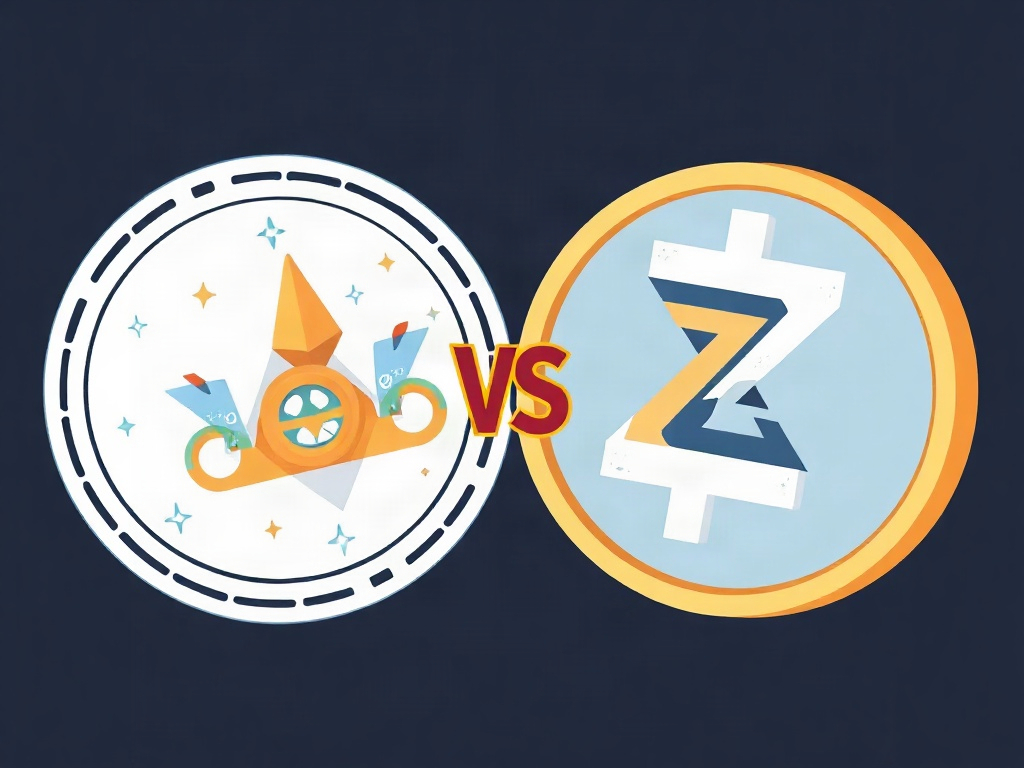
The debate over which cryptocurrency best serves as a store of value has intensified as privacy coins gain traction among investors seeking both discretion and long-term capital preservation. Among the most prominent contenders, Monero (XMR) and Zcash (ZEC) represent two distinct philosophical and technical approaches to privacy, each with implications for their viability as digital silver or gold. Understanding how their mechanisms, community support, and market dynamics align with the traditional criteria of a store of value—scarcity, durability, portability, and resistance to censorship—is essential for anyone navigating this niche. In the broader ecosystem, tools and services such as btcmixer_en2 often emerge in discussions about maintaining fungibility, a factor that indirectly influences how these assets are perceived and held over time.
Understanding the Contenders: Monero (XMR) and Zcash (ZEC)
The Privacy Paradigm
Monero was launched in 2014 with a core mission: to provide unconditional privacy by default. Its architecture relies on ring signatures, stealth addresses, and confidential transactions to obscure sender, receiver, and amount details. This "privacy by default" model ensures that every transaction on the XMR network is indistinguishable from another, a feature that proponents argue enhances its utility as a store of value by maximizing fungibility. Zcash, introduced in 2016, takes a different route by offering optional privacy through zk-SNARKs (zero-knowledge succinct non-interactive arguments of knowledge). Users can choose between transparent and shielded transactions, allowing for regulatory compliance in some contexts while still benefiting from strong cryptographic privacy when desired. This fundamental divergence shapes how each coin is evaluated in store of value discussions.
Supply Mechanics and Scarcity
Scarcity is a cornerstone of any store of value, and both XMR and ZEC have implemented capped or asymptotic supply models, albeit differently. Monero does not have a hard cap; instead, its tail emission model ensures a permanent, minimal block reward of 0.6 XMR per block, indefinitely. This design aims to keep the network secure through miner incentives while maintaining a predictable, slowly growing supply. Zcash, by contrast, has a fixed total supply of 21 million ZEC, mirroring Bitcoin’s scarcity profile precisely. The halving schedule and fixed cap make ZEC’s inflation rate transparent and diminishing over time, a characteristic that often appeals to traditional investors seeking a "digital gold" narrative. The contrast between tail emission and fixed supply fuels much of the comparative analysis in the XMR vs ZEC store of value discourse.
Store of Value Criteria: What Makes a Cryptocurrency "Digital Gold"?
To assess whether XMR or ZEC better fulfills the store of value function, it helps to benchmark against the timeless attributes that have defined gold and fiat reserves for centuries. Durability in crypto translates to the resilience of the underlying protocol and network uptime; both Monero and Zcash have demonstrated strong uptime and active development communities, though their response to security incidents and code audits varies. Portability is inherently satisfied by the digital nature of these assets, requiring only internet access and a compatible wallet. Censorship resistance, however, is where privacy coins distinguish themselves—XMR’s default privacy and ZEC’s optional shielding both aim to protect users from arbitrary freezing or seizure, a quality highly valued in store of value evaluations. Liquidity and market acceptance round out the criteria, influencing how easily an asset can be converted into other stores of value or fiat without significant slippage.
XMR vs ZEC: How Their Approaches Differ
Ring Signatures vs zk-SNARKs
The technical underpinnings of each coin’s privacy layer directly impact their perceived stability as long-term holdings. Monero’s ring signatures mix a user’s transaction with several others, creating a plausible deniability set that grows with network participation. This dynamic mixing makes blockchain analysis significantly more resource-intensive, which can be viewed as a strength for those prioritizing absolute financial privacy. Zcash’s zk-SNARKs, meanwhile, allow the network to verify transaction validity without revealing any details, using succinct proofs that are computationally efficient once set up. The trade-off is that ZEC’s optional privacy means not all transactions are private by default, potentially affecting fungibility unless users consistently opt into shielded transfers. In a store of value context, the consistency of privacy—whether every transaction is obfuscated or only some—becomes a decisive factor for investors concerned about future regulatory pressures or market perception.
Fungibility and Market Perception
Fungibility, the property that each unit is interchangeable and indistinguishable from another, is often cited as a critical component of a robust store of value. If certain coins can be "blacklisted" or tainted due to their transaction history, their utility and value may be compromised. Monero’s design inherently preserves fungibility, as no transaction can be singled out for special treatment without breaking the protocol’s core guarantees. Zcash, while offering strong privacy, relies on user adoption of shielded addresses to achieve similar results; historical data shows that a significant portion of ZEC supply remains in transparent addresses, which can lead to traceability concerns. This divergence influences how merchants, exchanges, and long-term holders view each asset’s reliability over multi-year holding periods.
The Role of Privacy Infrastructure: btcmixer_en2 and Beyond
In discussions surrounding privacy coins and their function as stores of value, the supporting infrastructure often plays an underappreciated role. Services like btcmixer_en2 exemplify the ecosystem of tools developed to enhance fungibility and privacy for cryptocurrency holders. While such mixers and tumblers operate in a complex regulatory landscape, their existence underscores the demand for mechanisms that can break transaction trails and restore the interchangeable nature of coins. For investors evaluating XMR vs ZEC store of value dynamics, understanding the available privacy-enhancing tools provides context for how each community addresses the ongoing challenge of maintaining asset purity over time. It is worth noting that the use of mixing services carries its own risks and considerations, and responsible investors should weigh compatibility, security, and legal implications before integrating such tools into their strategy.
Practical Considerations for Investors
Volatility, Liquidity, and Risk
Beyond technical attributes, practical market factors heavily influence the store of value thesis for any cryptocurrency. Both XMR and ZEC have experienced significant price volatility since inception, characteristic of the broader digital asset class. However, their liquidity profiles differ: ZEC, with its larger historical market cap and listing on more traditional exchanges, often exhibits tighter bid-ask spreads and higher daily trading volumes. XMR, while widely supported, can experience wider spreads, especially on fiat on-ramps. For a store of value, the ability to enter or exit positions without excessive price impact is crucial. Investors must also consider custody risks, including the security of wallets, the reputation of custodial services, and the potential for protocol-level upgrades or contentious hard forks that could alter supply dynamics or privacy guarantees.
Regulatory Landscape
The regulatory environment remains the most unpredictable variable for privacy coins aspiring to long-term store of value status. Governments and financial institutions worldwide are increasingly scrutinizing tools that facilitate anonymous value transfer, leading to delistings from exchanges, KYC/AML mandates, and even criminal charges in extreme cases. Zcash’s optional transparency framework has, in some jurisdictions, been viewed as a mitigating factor, allowing for compliance-friendly interactions while preserving privacy where needed. Monero’s uncompromising default privacy has resulted in more frequent regulatory friction, yet also galvanized a dedicated community focused on defending financial sovereignty. Any investor considering XMR vs ZEC store of value must stay informed about evolving legal precedents, as the classification and treatment of privacy coins can shift rapidly and impact market accessibility.
In concluding this comparative analysis, it becomes evident that both Monero and Zcash offer compelling, yet distinct, pathways toward fulfilling the store of value narrative within the cryptocurrency realm. Monero’s commitment to by-default privacy and its unique tail emission model appeal to those who prioritize absolute fungibility and predictable, indefinite security funding. Zcash’s fixed supply, zk-SNARK-based privacy, and compliance-oriented flexibility attract investors seeking a scarcity profile akin to precious metals and the ability to navigate regulatory landscapes more smoothly. Ultimately, the choice between XMR vs ZEC store of value hinges on an investor’s risk tolerance, privacy priorities, and long-term vision for wealth preservation in a decentralized ecosystem. As the sector matures and infrastructure such as btcmixer_en2 continues to evolve, the dialogue surrounding these assets will undoubtedly deepen, offering new insights into how privacy and value can coexist on the blockchain.

XMR vs ZEC store of value: Privacy Coins as Digital Gold
As James Richardson, Senior Crypto Market Analyst with over a decade of digital asset research, I approach the XMR vs ZEC store of value debate from a framework focused on scarcity, durability, and network resilience. Privacy coins occupy a unique niche in the store of value conversation, often marketed as "digital cash" but increasingly evaluated through the lens of long-term value preservation. The distinction between Monero’s mandatory privacy architecture and Zcash’s optional shielded pools fundamentally shapes their respective theses as stores of value, and understanding these mechanics is essential for any institutional or retail assessment.
From a technical standpoint, Monero’s ring signatures, stealth addresses, and bulletproofs create a uniformly private ledger, which enhances fungibility—a core attribute of any reliable store of value. Zcash, by contrast, gives users the choice between transparent and shielded transactions via zk-SNARKs, which introduces a governance and adoption trade-off: while the optional privacy model appeals to regulated entities, it risks diluting the very fungibility that underpins value retention over time. Both assets cap their supply at roughly 18.4 million units, yet Monero’s block reward tail emission and Zcash’s fixed supply schedule reflect different monetary policies that merit careful scrutiny when judging long-term purchasing power.
Practically, the XMR vs ZEC store of value comparison hinges on regulatory trajectory and ecosystem liquidity. Monero’s privacy-by-default has drawn heightened scrutiny from exchanges and regulators, potentially impacting its accessibility and price stability, whereas Zcash’s selective transparency has facilitated easier on-ramping into traditional finance channels, albeit at the cost of reduced default privacy. For investors seeking a privacy-preserving store of value, the choice ultimately distills to whether mandatory fungibility or regulated compatibility carries more weight in a portfolio’s risk-return profile. Looking ahead, both networks will need to navigate the evolving compliance landscape without compromising the core properties that make them attractive as decentralized value repositories.